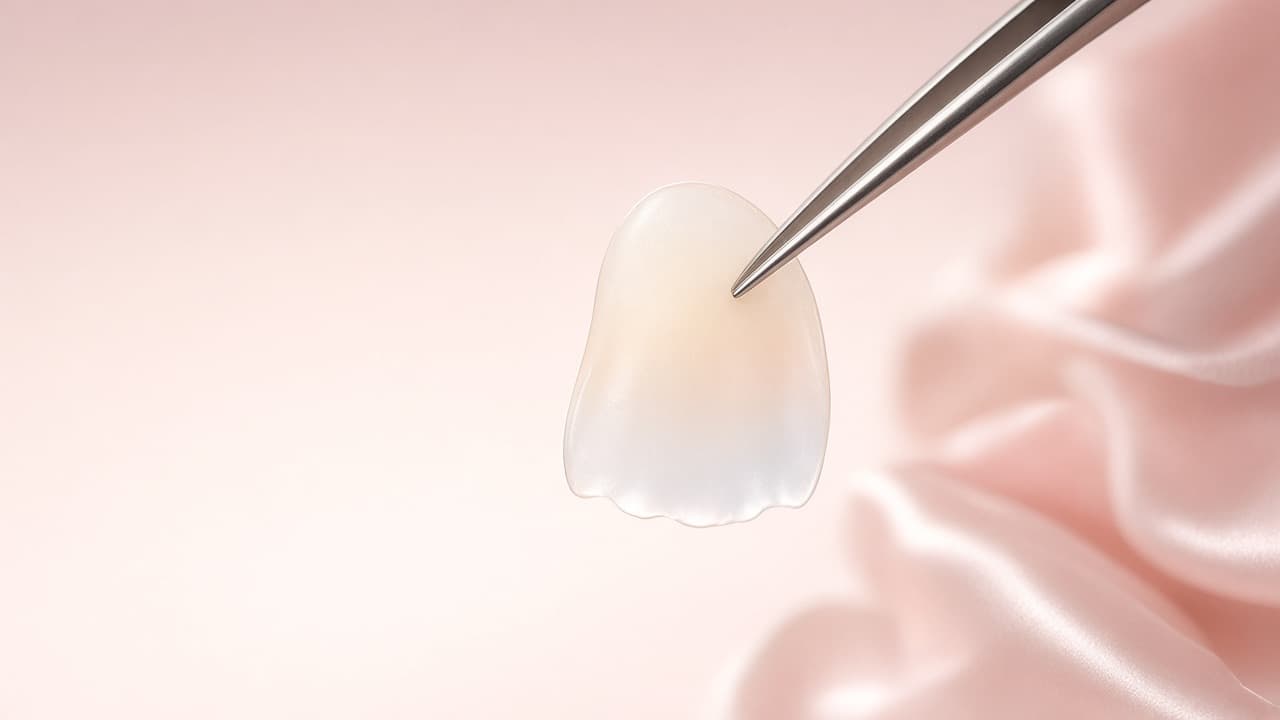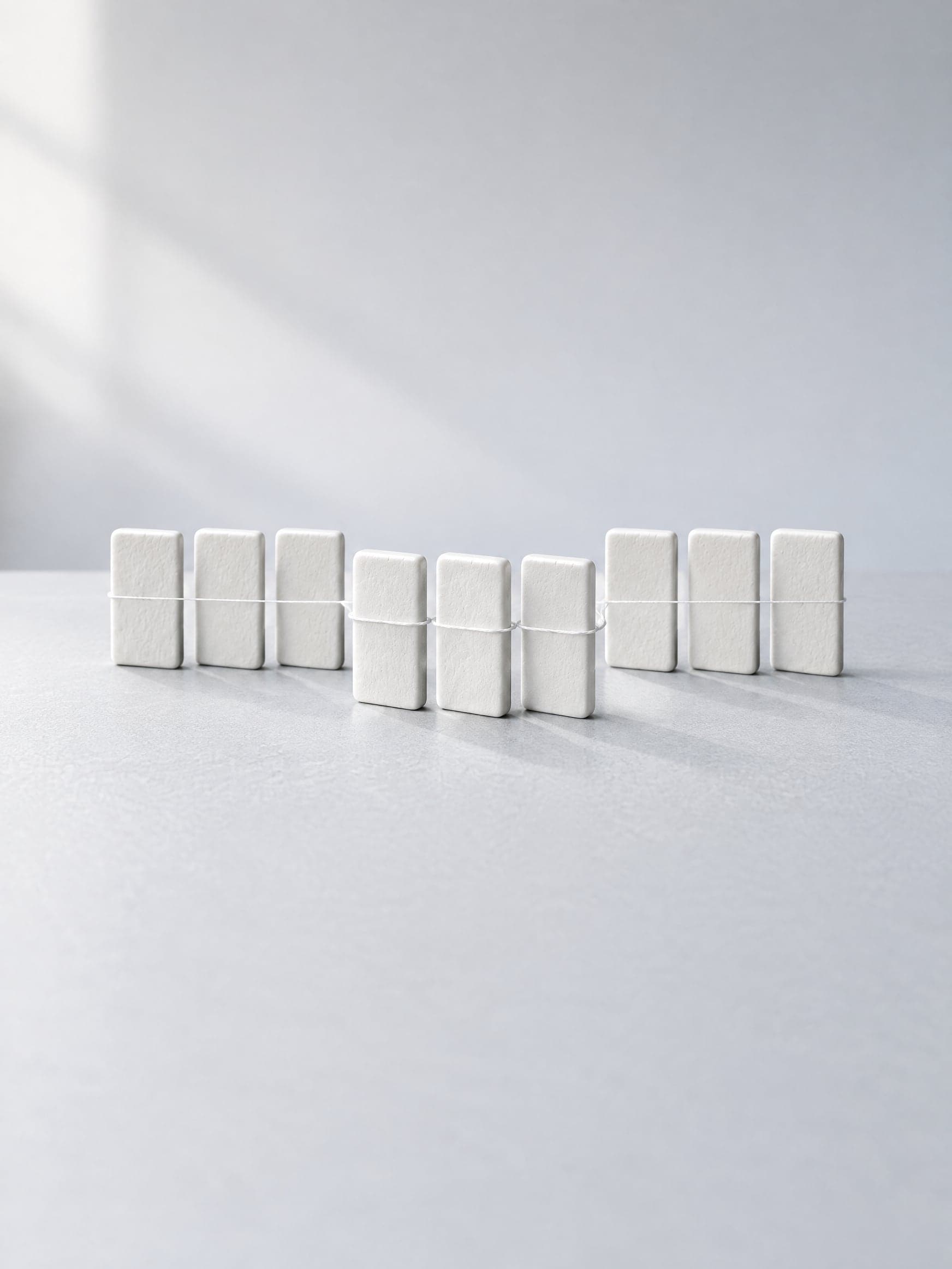
How far does “no-prep” go in not shaving the tooth?
It means the front surface is not ground down to make room for the thickness of the porcelain. I often hear, “Please just do it without shaving, no matter what.” Enamel that has been shaved doesn't grow back, so I understand that feeling. Before bonding, the bonding surface is cleaned and treated with an acid etch, but the tooth is not shaved.
Preserving the enamel is what I look at first. Enamel is needed for the porcelain to bond firmly and for the margins to open up less over time. If the dentin beneath is opened, the tooth becomes sensitive and the bond weakens. In a study that followed 580 veneers for up to 12 years, 99% of those prepared only within the enamel remained, while those bonded to dentin were about 10 times more likely to fail[2].
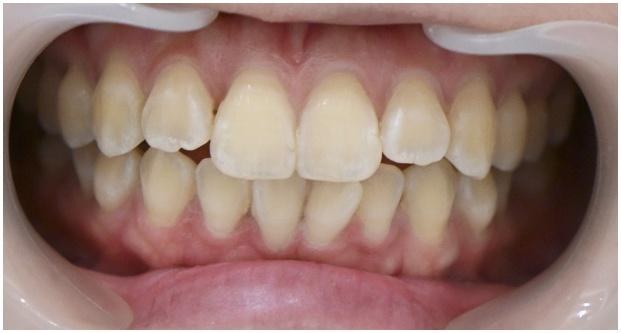
Which teeth are suitable for no-prep porcelain veneers?
| Current teeth | No-prep |
|---|---|
| Small or with gaps between them | Placed without shaving |
| Worn or chipped, with reduced shape | We consider placing veneers |
| Alignment is fine; only brightening the color | Considered if the underlying color is light |
| Protruding or large teeth | Not placed |
For worn or chipped teeth, the treatment fills in what has been lost, so there is little reason to shave. For evenly aligned teeth where you only want to brighten the color, the desired brightness can be achieved even with thin porcelain if the underlying color is light. If teeth sit inside the line of the arch, they protrude less even with a thin veneer. For a closer look at the conditions, see Conditions for no-prep porcelain veneers.
Which teeth are not suitable for no-prep porcelain veneers?
If the front teeth stick out a lot or the teeth themselves are large, no-prep is not an option. Only thickness is added, so the teeth look crowded and the mouth looks more protruding. I also don't bond veneers on a skeletal protruding mouth where the alveolar bone sticks out. If something can't be done, I tell you so up front.
Severe tooth grinding or clenching, or a bite where the front teeth strike hard edge to edge, are also cases where I don't place thin porcelain first. In a study that followed 364 porcelain veneers for 8 years, only 63.9% remained after 7 years in people who grind their teeth but did not wear a night appliance, far lower than in those who wore one (89.1%)[4]. If the finished porcelain looks big when tried on the teeth, I don't force a change in shape; I don't bond it. Either the teeth are first moved to make room, or we consider a laminate veneer with the front surface lightly trimmed.
Does the color underneath show through if the veneer is thin?
It can. Without shaving, the porcelain has to be thinner, and the thinner it is, the less it can hide the color underneath. If the natural tooth is dark or the staining is deep, it won't reach the desired brightness and the color underneath will show through.
In such cases, I look at first brightening the base with teeth whitening. For a tooth that darkened after root canal treatment, internal whitening (bleaching that tooth alone from the inside) is sometimes considered first. Right after whitening, the color hasn't settled yet and the bond can be weaker, so we usually wait 1 to 2 weeks before choosing the porcelain color. A meta-analysis of 52 laboratory studies also found that bond strength to enamel and dentin dropped right after whitening, and the difference was no longer clear after 2 weeks[3].
How we do it at Wonjin Dental
The treatment that is placed without shaving is Brinate. Since there is no shaving, there is no anesthesia and no temporary tooth.
| Type | Fabrication | Thickness | Time | Cost per tooth |
|---|---|---|---|---|
| Porcelain veneer (front of tooth slightly trimmed) | Machine-made | About 0.3mm | Same day on days when it is possible | ₩330,000 |
| Build-up | Layered by hand | 0.1mm or less | About 1 week | ₩550,000 |
| Platinum | Layered by hand | 0.1mm or less | About 2 weeks | ₩990,000 |
As of September 2026, VAT included (cosmetic treatment); other items are listed in All fees. Not shaving doesn't mean less work in making the veneers. The thinner they are, the more handwork they take. That is why I clearly separate the teeth that are suitable from those that aren't before bonding.
Frequently asked questions
Won't my teeth look big if I get several?
The original size and alignment matter more than the number. If teeth stick out, they look bulky regardless of the number.
Do no-prep porcelain veneers hurt?
Since there is no shaving, it is done without anesthesia. Right after bonding there may be a brief odd feeling or mild sensitivity, but since the dentin isn't touched, sensitivity tends to be minimal.
How many years do no-prep porcelain veneers last?
There is no set number of years. A systematic review comparing no-prep or minimal-prep veneers with the reduction-type laminate veneers common elsewhere found that the survival rate of minimal-prep veneers was not lower, and some results showed them lasting longer, but noted that the study methods varied, so the findings should be read with caution[1]. Whether they are bonded to enamel, whether there is a bite where one tooth touches first or tooth grinding, and how well the margins are cleaned determine their lifespan. Checking the margins at regular checkups and catching small lifting early is the way to make them last.