Can you tell the cause from the way the gums are swollen?
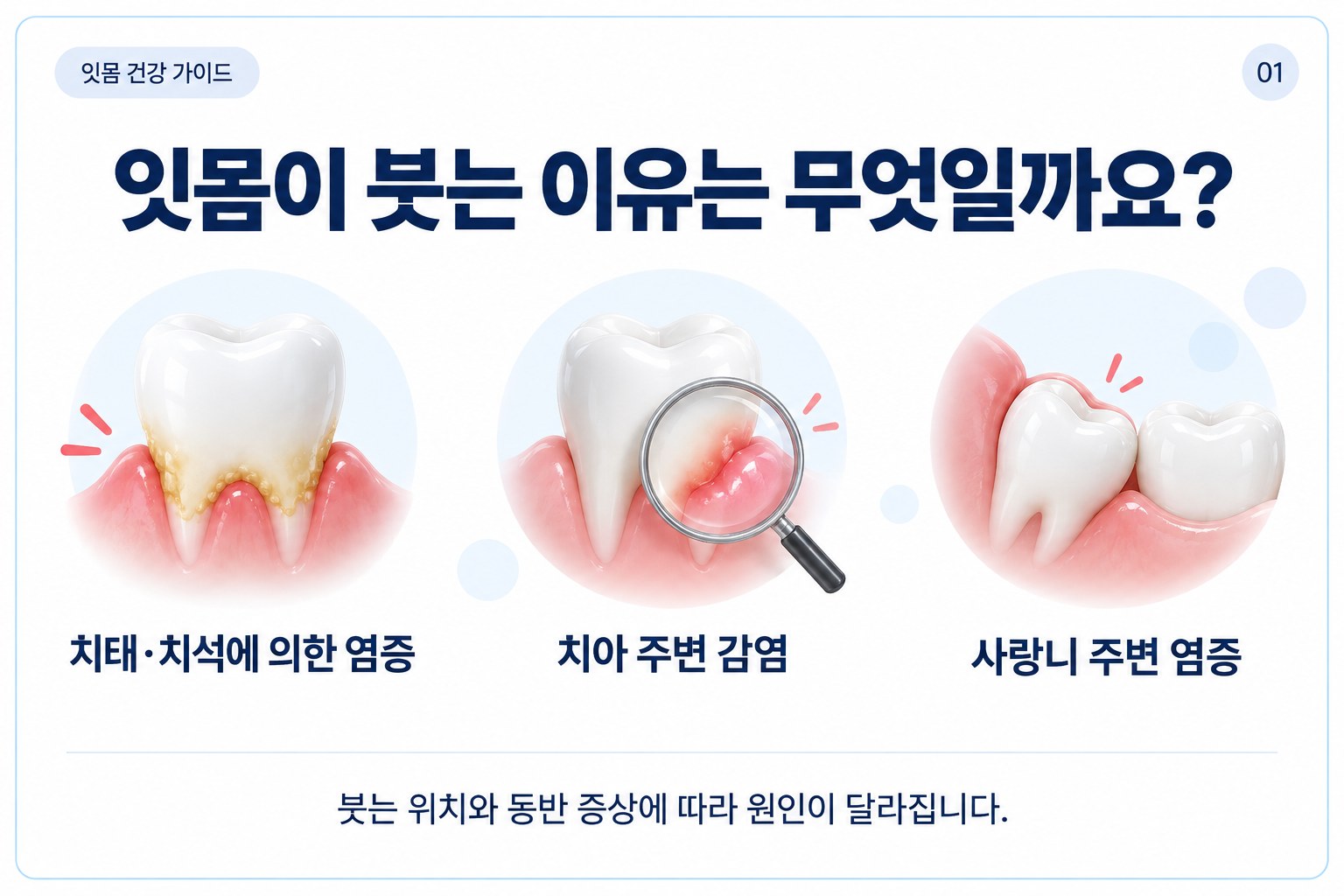
To some extent, yes. When someone comes in saying, “My gums were fine until yesterday, and suddenly they swelled up. Will they get better if I rest?” I first ask when it started, which side it is on, whether it bleeds, and whether it hurts. Even with the same swelling, an area that is swollen widely and an area that bulges in just one spot have different causes.
| Type of swelling | Common cause | Treatment needed |
|---|---|---|
| The gumline swells over a wide area and bleeds | Gingivitis or periodontitis caused by tartar and plaque | Scaling, and gum treatment if needed |
| Bulges in just one spot and hurts | Pus (abscess) that started in the gums or inside the tooth | Treating the cause of the pus |
| The gum behind the last molar is swollen | Inflammation around a partly erupted wisdom tooth (pericoronitis) | Cleaning, and considering extraction depending on the condition |
If my gums are swollen widely and bleeding, is it because of tartar?
That is the most common cause. Bacteria gather on the tooth surface and form a sticky film (plaque), and if it is not brushed away, it hardens into tartar. When it builds up along the line where the teeth meet the gums, it causes inflammation, swelling, and bleeding.
If the inflammation is only in the gums, it is gingivitis; if the bone supporting the tooth is damaged too, it is periodontitis. They can look alike but are treated differently, so I do not tell them apart by the size of the swelling alone. Hardened tartar does not come off with a toothbrush, so you need scaling, and if it has reached the bone, it leads on to gum treatment.
What is the difference between gingivitis and periodontitis?
| Category | Gingivitis | Periodontitis |
|---|---|---|
| Where the inflammation is | Only in the gums | Below the gums, down into the bone that supports the teeth |
| Common symptoms | Swelling and bleeding when brushing | Bleeding and swelling, plus bad breath, receding gums, and loose teeth |
| Can it be reversed? | Returns to normal once the cause is removed | The inflammation stops, but bone that has been lost usually does not grow back |
| Treatment | Scaling and brushing habits | Scaling plus gum treatment to remove tartar below the gumline |
Because the two look similar from the outside, I check the depth of the gum pockets and use X-rays to see whether bone has been lost. When it is caught at the gingivitis stage, scaling is often enough. I have written separately about treating periodontitis and the criteria for saving loose teeth in periodontitis (gum disease) treatment.
If it bulges in just one spot, is it pus?
That is likely. It is also common for it to feel soft when pressed, or to leave a salty or bitter taste when you press on it. When only the area around a specific tooth bulges and hurts, it is often an infection that has collected into an abscess. It can start in a gum pocket, or it can start at the root tip after a cavity has reached the nerve. It is hard to tell from the outside alone, so I look at X-rays as well.
An abscess does not close up just by waiting. Depending on the cause, we drain the pus or start root canal treatment. Cases that start at the root tip are covered in detail in tooth root inflammation.
If the gum at the very back is swollen, is it because of a wisdom tooth?
When a wisdom tooth has only partly come in and is covered by gum, food gets caught in the gap and the area tends to swell. This is called pericoronitis, and in severe cases it can be hard to open your mouth or it can hurt to swallow. However, not all swelling at the very back is caused by a wisdom tooth, and having a wisdom tooth does not automatically mean it should be pulled. I decide after looking at its position, how inflamed it is, and how many times the same symptoms have come back.
Do gums swell when you are tired?
When you are tired, your immunity drops and swelling can become more noticeable, but in most cases it is tartar and inflammation that were already there showing themselves. If it keeps coming back and you put it down to your condition alone, you miss the cause. If it settles after rest but the same spot swells every busy period, that means there is still a cause in that spot that needs treatment. Diabetes, hormonal changes such as pregnancy, and some medications also affect the gums, so if your gums swell often, please tell us about your medical history and medications.
How we handle it at Wonjin Dental
I do not just put swollen gums down to fatigue. I first sort out whether it is tartar, a single pocket of pus, or a wisdom tooth at the back. If severe pain, pus, fever, or swelling of the face or jaw come together, I see you the same day. If you are short of breath or have trouble swallowing, do not wait for a clinic appointment — go to the emergency room.
Frequently asked questions
How many days does it take for swollen gums to go down?
Once the cause is treated, gingivitis usually settles within a few days to 1–2 weeks. Swelling that goes down briefly without treatment tends to come back in the same spot.
Does rinsing with salt water help when my gums are swollen?
It can rinse your mouth and make it feel better for a while, but it cannot remove tartar or pus. Think of it only as a support until you get treatment.
Can I just take gum medicine from the pharmacy?
It may ease the symptoms for a while, but it does not treat the cause. Even if the swelling goes down while you take it, get seen if the same spot keeps coming back.
Should I still brush when my gums are swollen?
Yes, brush gently with a soft toothbrush. Scrubbing the swollen area hard makes it bleed more and swell more. If you skip that area for a few days because it hurts, plaque builds up further and it actually lasts longer.