Why is a sinus lift done only for upper molars?
Because there is an air space called the maxillary sinus right above the upper molars. The tooth roots, the alveolar bone, and the maxillary sinus form layers, and after a tooth is extracted, the bone shrinks and the sinus can drop lower, making the remaining bone even thinner. The remaining height differs from person to person.
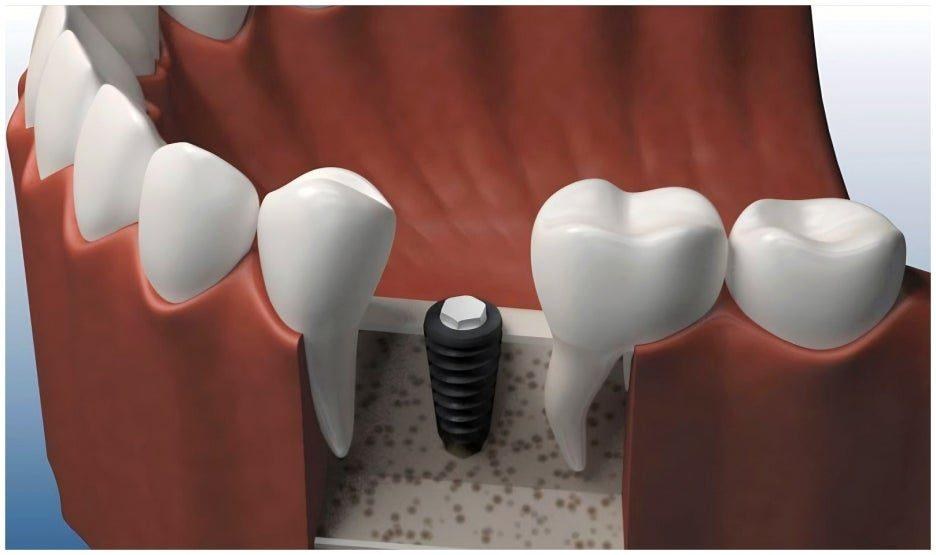
If enough bone remains to surround the screw, the implant is placed without a sinus lift. If there is not enough and it is placed anyway, the screw can pierce the thin membrane covering the sinus (the Schneiderian membrane). A tear in the membrane is called a perforation.
How do the sinus lift methods differ?
There are two: the crestal approach (from below), which lifts from underneath, and the lateral approach, which opens a window from the side. Neither is the better method; the remaining bone height decides the method.
| Category | Crestal approach (from below) | Lateral approach |
|---|---|---|
| Method | The membrane is pushed up through the implant site | A window is opened in the side bone and the membrane is lifted under direct view |
| Remaining bone | When there is a fair amount | When it is very thin |
| Incision and swelling | Relatively little | Relatively more |
| Membrane check | Not seen directly | Checked visually |
| Implant placement | Usually the same day | The same day or after the bone has filled in |
As a rough guide, if enough bone remains, we go without a sinus lift; if it is slightly short, we consider the crestal approach; and if only a few millimeters remain, we consider the lateral approach. This is a reference guide that varies with width and density even at the same height.
When can an implant be placed without a sinus lift?
If the height is sufficient and the width and density can also hold up, we do not add a sinus lift. In some cases a short implant is used to avoid the membrane. However, upper jawbone is often porous inside, and if the width is narrow, an implant of sufficient thickness cannot be placed even if height remains. In some spots, where strong forces are repeated, as with teeth grinding, a short screw has a hard time holding up.
A sinus lift and implant placement are done on the same day only when initial stability (the screw not moving on the day it is placed) can be obtained from the remaining bone. If stability cannot be achieved, the bone is filled first and the implant is placed a few months later. Bone grafting for implants in general is summarized in the Bone grafting for implants article.
What are the side effects of a sinus lift, and what is recovery like?
The most important complications are membrane perforation and sinusitis. A small perforation is sometimes sealed while the procedure continues, while with a large perforation the graft is stopped and we wait for the membrane to heal. That adds a few months to the overall period.
- There may be swelling and bruising for 2–3 days after surgery.
- For 1–2 weeks, do not blow your nose hard or sneeze with your mouth closed. Pressure inside the sinus pushes on the membrane.
- A little nosebleed is common. If it continues, contact us.
- It usually takes several months for the grafted bone to harden, and longer the more bone is grafted.
Having sinusitis does not always mean it cannot be done. If you have recurring sinusitis, yellow nasal discharge, or facial pain, or if CT shows thickened mucosa or fluid buildup, we evaluate that first and, if needed, coordinate the order with ear, nose, and throat (ENT) treatment.
How we do it at Wonjin Dental
Using panoramic and three-dimensional (CT) images, we point out the remaining height, width, and density, and tell you whether to go without a sinus lift, lift from below, or fill while viewing the membrane from the side. We decide after explaining what we would stop doing if the membrane tears. Wonjin Dental also has an oral and maxillofacial surgeon working with us.
| Item | Cost |
|---|---|
| Sinus lift, crestal approach | ₩500,000 |
| Sinus lift, lateral approach | ₩1,000,000 |
| Simple bone graft / complex bone graft | ₩150,000 / ₩300,000 |
| Osstem implant SA / BA / SOI | ₩300,000 / ₩500,000 / ₩800,000 |
As of September 2026. Prices by item can be found on All treatment fees. We do a sinus lift only when the bone height is not enough.
Frequently asked questions
Does a sinus lift hurt a lot?
The surgery is done under anesthesia. There is throbbing and swelling for 2–3 days after surgery, which in most cases is controlled with the prescribed painkillers. The lateral approach tends to cause more swelling than the crestal approach.
Can I fly after a sinus lift?
Changes in air pressure put pressure on the sinus, so it is best to avoid flying for 1–2 weeks right after surgery. If you have travel plans, please let us know in advance when setting the surgery date.
With a sinus lift, how long does the whole process take until the implant?
If the implant is placed the same day with the crestal approach, it is only slightly longer than a regular implant. If the bone is filled first with the lateral approach, you wait several more months until placement, and the whole process can take more than half a year.