How much whiter does teeth whitening make your teeth?
If tooth color is divided into shades, one professional whitening session often brightens teeth by two or three shades, and some people get brighter with repeated sessions. However, not everyone brightens by the same amount. To answer the question “My teeth are yellow — will whitening make them white?”, we first have to look at why they are yellow.
There are two main reasons teeth look yellow. One is color from pigments in coffee, tea and tobacco soaking into the teeth; the other is the yellow dentin inside showing through as the enamel wears down. Hydrogen peroxide, the main ingredient in whitening agents, breaks the first kind of pigment into small pieces to brighten it, while the second kind responds poorly. Seoul National University Hospital’s medical information also divides tooth discoloration into cases where pigment has settled on the surface and cases where the tooth’s inner structure has changed due to causes inside or outside the body[2].
Which colors respond well to whitening, and which don’t?
| Current tooth | Response to whitening |
|---|---|
| Yellow teeth with pigment from food and drinks soaked in | Brighten well |
| Teeth that have yellowed overall with age | Generally respond |
| Teeth with severe enamel wear | Limited, as the yellow dentin shows through first |
| White spots from moderate or more severe fluorosis | Don’t fade easily |
| Severe tetracycline staining, grayish color | Respond poorly even with repeated sessions |
| Composite fillings, crowns, porcelain veneers | Don’t get whiter |
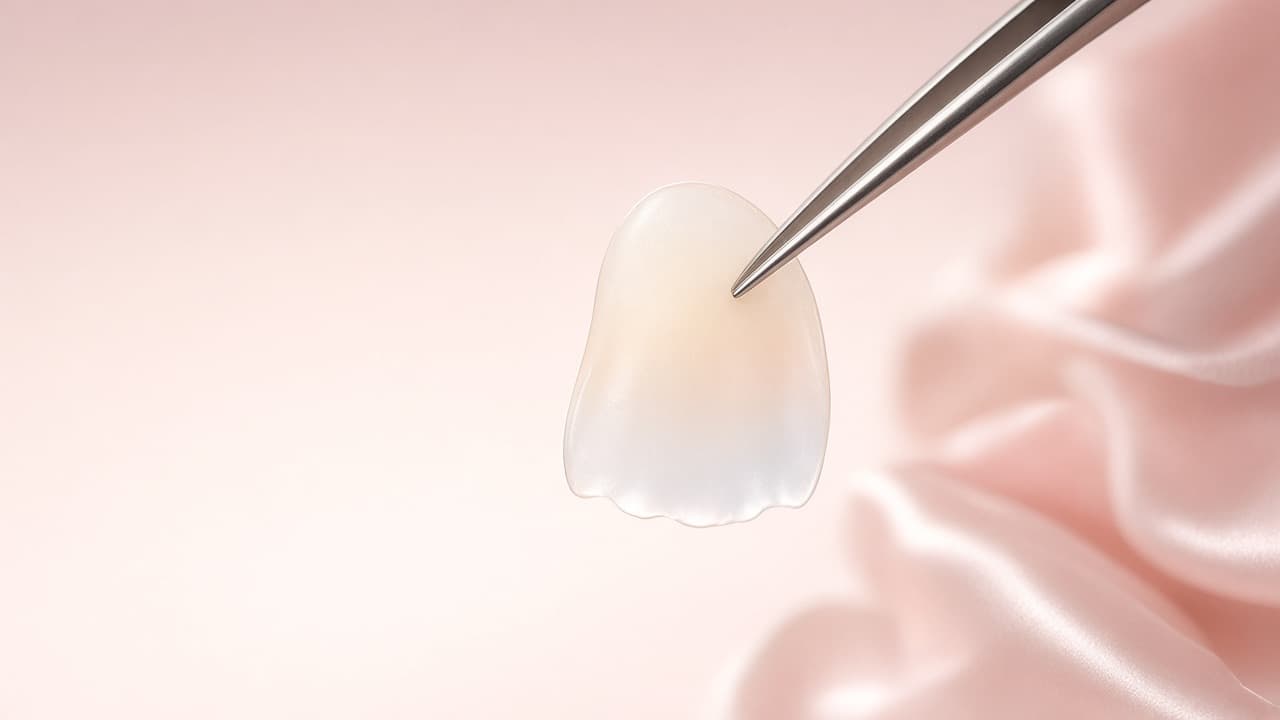
For teeth that respond poorly, we don’t keep repeating the agent; we tell you the limits first. In that case, we talk about methods that match the color by covering the surface, such as Brinate. However, we don’t place it on teeth that protrude forward.
Do filled or crowned teeth get whiter too?
The agent doesn’t soak into composite fillings, crowns or porcelain veneers, so they don’t get whiter[4]. Only the natural teeth brighten, so the difference from filled areas can actually become more noticeable. If you have fillings on your front teeth, we recommend redoing those areas to match the new color after the color has settled following whitening, which usually takes 1–2 weeks.
What’s the difference between whitening at the dentist and at home?
The agent used at the dental clinic is more concentrated than over-the-counter products, so changes on the day are more visible. Over-the-counter products have a low concentration that prioritizes safety, so they are suitable for helping maintain results. The UK NHS also advises that products bought from pharmacies or online are not as effective as whitening at the dentist and can harm the teeth and gums[4]. A 2025 meta-analysis of randomized studies comparing in-office whitening with at-home whitening using custom trays found no clear difference in how much brighter teeth became on a shade guide or in how often sensitivity occurred; sensitivity was slightly milder with at-home whitening, but the quality of the evidence was low[1]. The types and prices of teeth whitening at Wonjin Dental are below.
| Type | Method | Price |
|---|---|---|
| Professional whitening | The agent is applied and activated at the clinic | 1 session ₩110,000 / 3 sessions ₩330,000 |
| At-home whitening | At home with custom trays and gel | ₩250,000 per arch |
| Non-vital tooth whitening | Brightens a root-canal-treated tooth from the inside | ₩110,000 |
As of October 2026, VAT included (cosmetic treatment). Check detailed items in all fees.
Is sensitivity after whitening normal?
When the agent passes through the dentin and gets close to the nerve, you feel sensitivity, which usually lasts a day or two, or close to a week at most, before settling. A Cochrane systematic review of at-home whitening also found that the most common side effects were sensitivity and gum irritation, which were more frequent at higher concentrations but usually mild and temporary[3]. If the pain is strong and lasts long, we check for other causes such as a crack or a cavity. For teeth that are already sensitive or where the gums have receded and the neck of the tooth is exposed, we don’t apply the agent or we reduce the area.
How we do it at Wonjin Dental
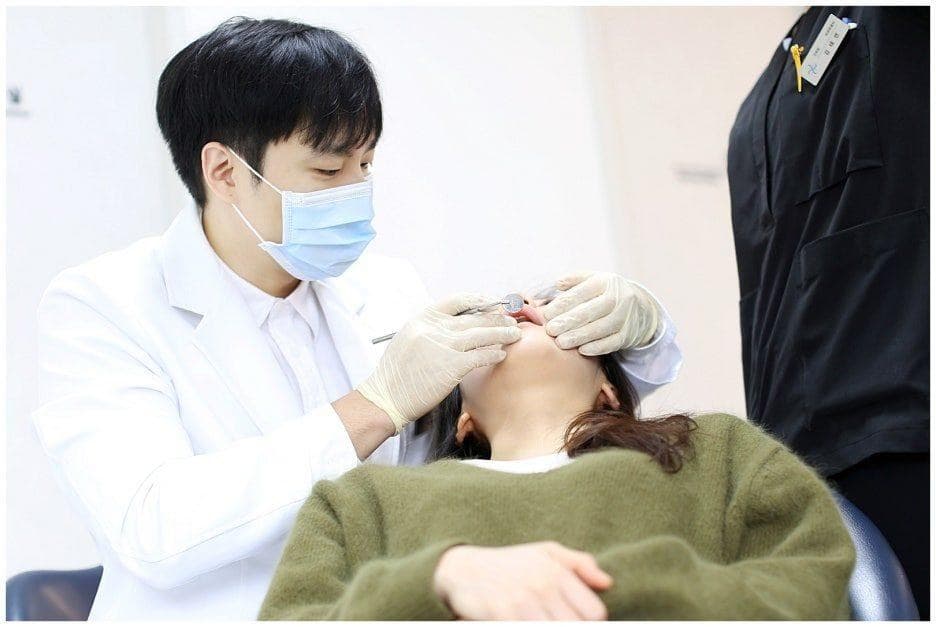
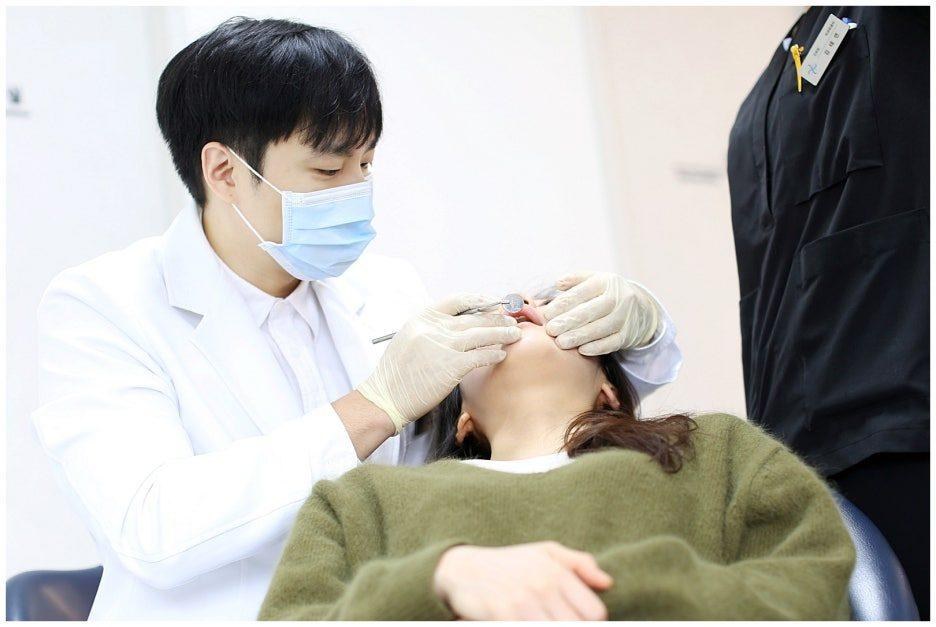
On many days, the whole process — cleaning the surface with scaling, applying a gum protector, applying the whitening agent and activating it with light, then rinsing it off — is finished in one sitting. It can take longer depending on the flow of appointments, so please allow extra time. Before the consultation, we first check whether your teeth are a color that suits whitening.
Frequently asked questions
How soon after whitening can I drink coffee?
For a day or two right after the procedure, teeth stain easily, so it’s best to avoid coffee, black tea, cola and smoking. After that, rinsing with water after drinking something dark is enough.
When does the whitened color become the baseline?
Teeth look brightest on the day, and the color usually settles over 1–2 weeks. The color at that point is the baseline, and how long it lasts afterward depends on what you eat and drink and how often. The UK NHS explains that if you follow your dentist’s care instructions, the effect can last around 3 years[4].
Does just one session work?
Many people see a change after one session. We decide whether to add more based on the brightness you want and the first response, and for teeth that respond poorly from the start, we don’t increase the number of sessions.
Does whitening weaken teeth?
The general view is that whitening done at the set concentration and method doesn’t weaken the tooth structure. Sensitivity is temporary in most cases. However, we set the number of sessions so it isn’t repeated excessively at short intervals.