Is my small front tooth really a peg lateral?
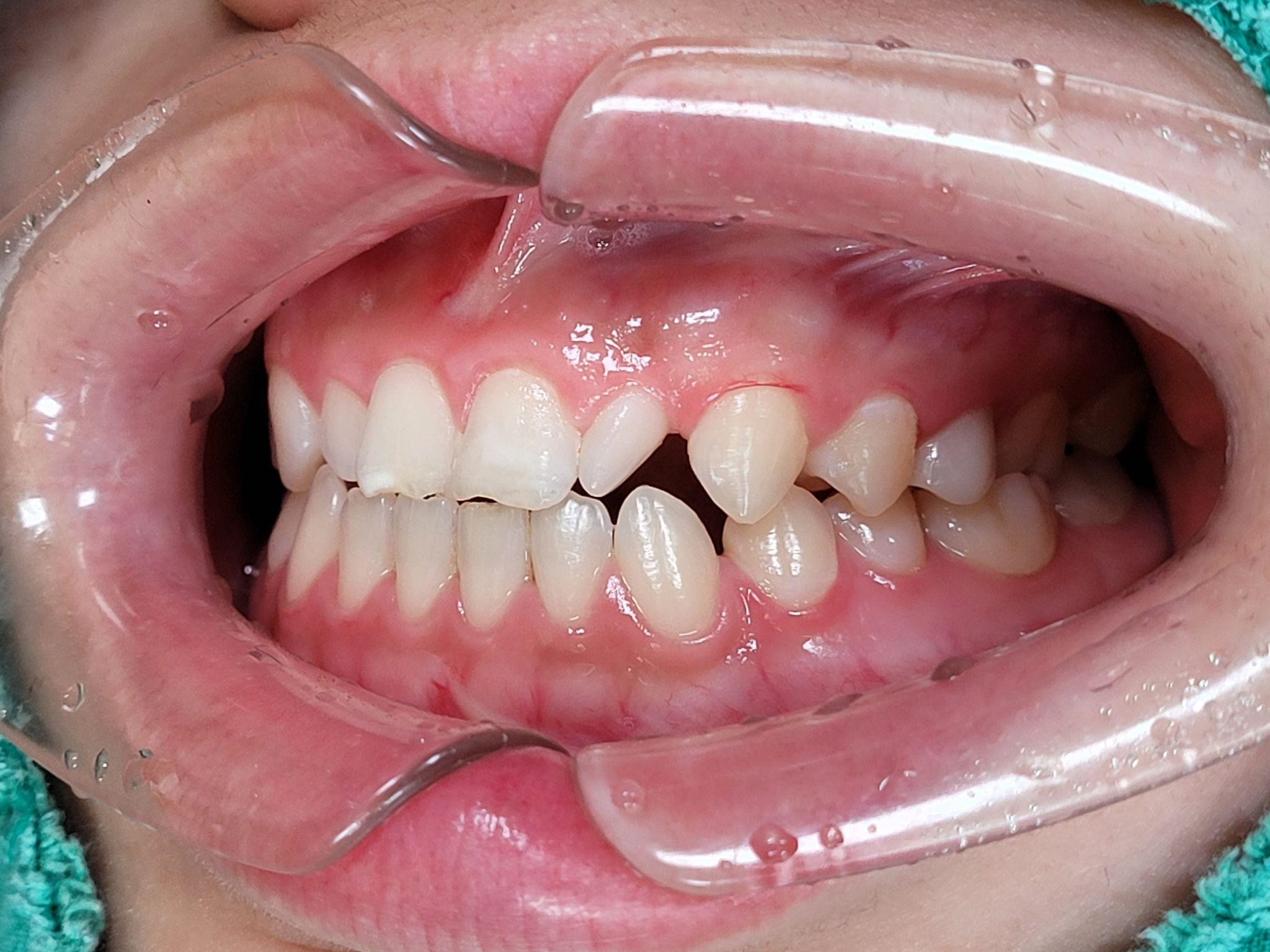
A tooth that is narrower than its neighbors or has a pointed tip is called a peg lateral (microdont), and it is most common in the upper second front tooth (lateral incisor). “Only my side front tooth is small, so there seem to be gaps when I smile.” I hear this concern often in the treatment room, and the first thing I check is whether the tooth is really small.
There are three reasons a tooth can look small: the tooth itself came in small, the gaps are wide so it looks small, or the tooth sits further back so it looks small. These three are treated differently. When the gaps are wide, I need to work out how to divide the space; when the tooth sits back, I need to calculate separately how much can be added forward — so I first check the proportions with photos and scans.
Does a veneer on just one peg lateral look natural?
If the size, shape, and color of the lateral incisor on the other side and the central front teeth are already natural, bonding just the one small tooth looks natural. Whether it's one tooth or several is decided by looking at the left-right width ratio and the central front teeth.
However, if the tips of the central front teeth are worn and short, enlarging only the small tooth can actually make the neighbors look shorter. In that case, I adjust the length as well. When doing just one, it has to match the color and translucency of the neighboring teeth, so if only one tooth is made larger and whiter, it looks different from the others.
Which peg laterals can be bonded without drilling?
Ones where the tooth is small, sits behind the arch line, and has a gap left beside it. Since there is already room to add material, there's no need to drill the front surface. Peg laterals tend to have thin enamel, so there is even less room to drill, which makes a no-prep approach especially suitable.
| Current tooth | Treatment |
|---|---|
| Small, sits back, with gaps left | Bonded without drilling |
| Only one side is small, the other side is balanced | Only that tooth is matched |
| The gap is too wide or the tooth is rotated | The tooth is moved first |
| Sticks out, or a skeletal protruding mouth | Not bonded |
I covered the method of building up a tooth without drilling in more detail in Peg laterals: how to build them up without drilling.
When should orthodontics come before veneers?
If the gaps are too wide or the tooth is rotated, I don't fill the whole gap with porcelain alone. A single tooth becomes too wide and looks bulky, and the midline looks tilted. In that case, I first move the teeth with partial orthodontics to divide the space evenly, and then bond. I don't make room by drilling.
If the small tooth already sticks out, even a thin layer of porcelain makes it look that much more prominent, so I don't bond it. When something can't be done, I tell you so first.
How we do it at Wonjin Dental
During the consultation, I don't start by deciding how many teeth to bond. I look together at where the width is lacking, whether the tooth sticks out, the height and slope of the gum line, and whether there is teeth grinding. I use Brinate, which is placed without drilling, so there is no anesthesia and no temporary tooth.
| Brinate | Thickness | Time | Per tooth |
|---|---|---|---|
| Basic | 0.3mm | Same day possible | ₩330,000 |
| Build-up | 0.1mm | About 1 week | ₩550,000 |
| Platinum | 0.1mm | About 2 weeks | ₩990,000 |
As of September 2026, including VAT (cosmetic treatment). You can also check them in the full fee list.
Frequently asked questions
Can a peg lateral be built up with composite resin?
Composite resin can also add width and length. It's finished the same day, but it tends to discolor or wear over time, so porcelain is generally better for long-term durability.
Are peg laterals hereditary?
Similar shapes often appear in other family members, so I consider there to be a hereditary tendency. They can appear on one side only or on both sides.
Do veneers on peg laterals come off?
When well bonded to enamel they last a long time, but they can chip or come off if you bite through hard things with your front teeth or grind your teeth. Bonding and bite are checked at regular checkups.
If I remove it later, will my tooth go back to how it was?
If it was bonded without drilling, the tooth's shape mostly remains after removal. However, the bonded surface needs to be cleaned up, so it won't be exactly the same as at the start. That is why I explain this clearly before bonding.