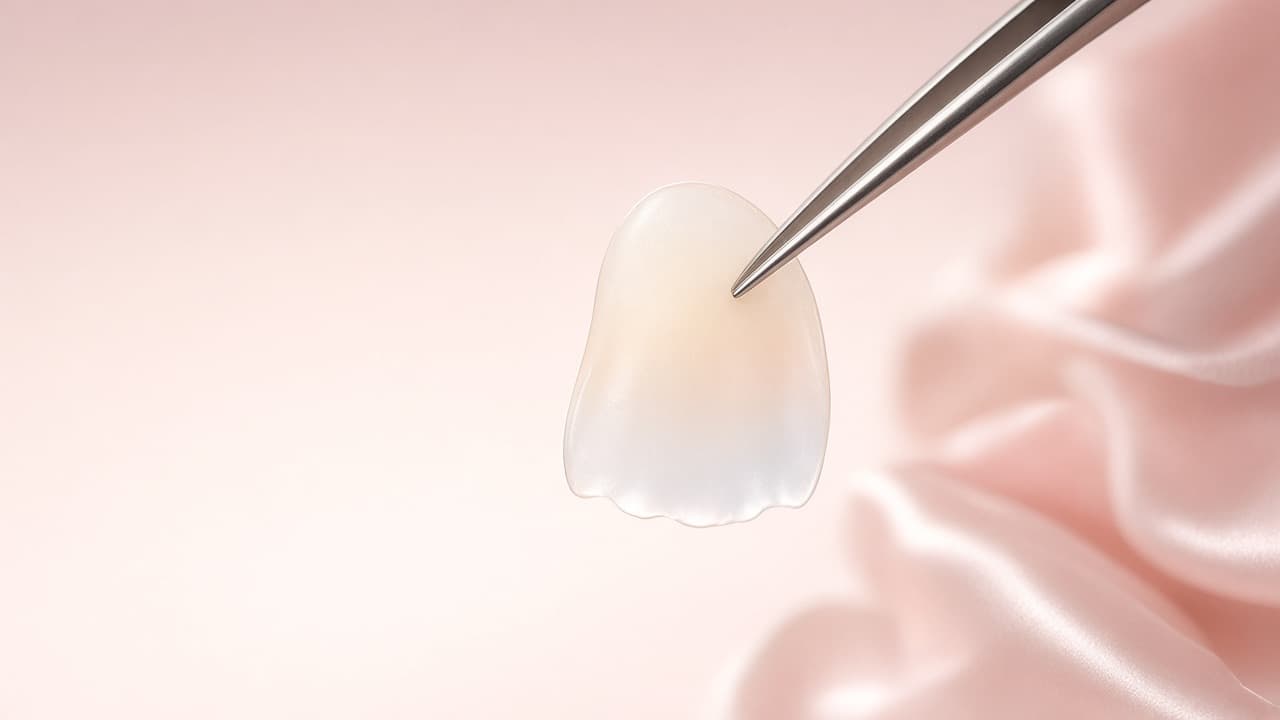
What is a peg (undersized) tooth?
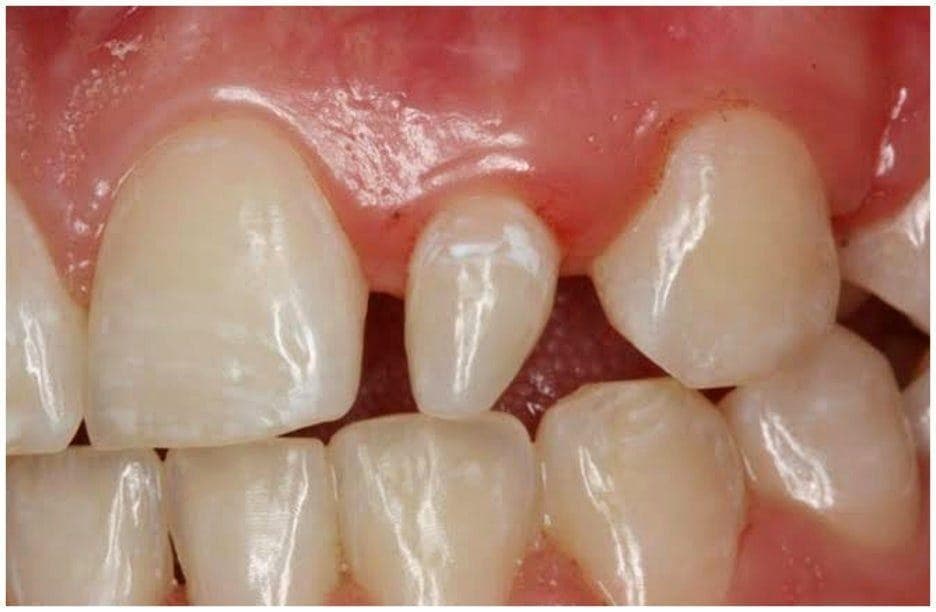
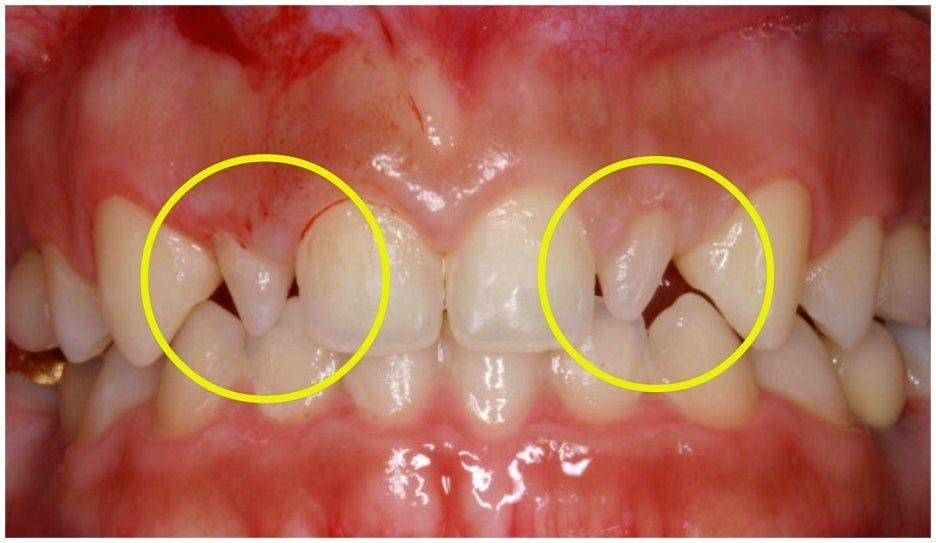
A peg tooth is a tooth that came in narrower than normal, and it is most common in the lateral incisors next to the upper front teeth. When the lateral incisors are small, gaps open between the front teeth, or the lateral incisors look pointed and short. Small front teeth in general are also covered in How to make small front teeth bigger.
Small teeth have the advantage that there is space to add to, so less needs to be shaved. That does not mean every peg tooth can be enlarged without shaving.
Peg teeth are strongly influenced by genetics, so often someone else in the family has something similar. Sometimes only one side is small and sometimes both are, and it can also come together with the lateral incisor on the other side never coming in at all[3]. A meta-analysis of 36 studies reported cone-shaped lateral incisors with a pointed tip in about 1.8% of people, and they were more common, at 3.1%, in Asian (Mongoloid) populations[3]. In the same study, a little over half of those with only one cone-shaped lateral incisor were missing the lateral incisor on the other side[3].
What are the conditions for enlarging a tooth without shaving?
I look at four things: tooth position, space, color, and bite.
| Check | Placed without shaving | Not placed |
|---|---|---|
| Position | Inside the line of the arch | Sticks forward or is rotated |
| Space | There is room to add width | Not enough room |
| Color | Can be covered with thin porcelain | Deeply dark |
| Bite | Front teeth are stable | Deep bite or tooth grinding |
There must also be no gum inflammation. Where inflammation remains, it is hard to fit the edges of the veneer precisely. The width to add is calculated in advance with a scan or model, and if the room is slightly short, we sometimes first open space between the neighboring teeth with orthodontics.
Do no-prep veneers really leave the tooth untouched?
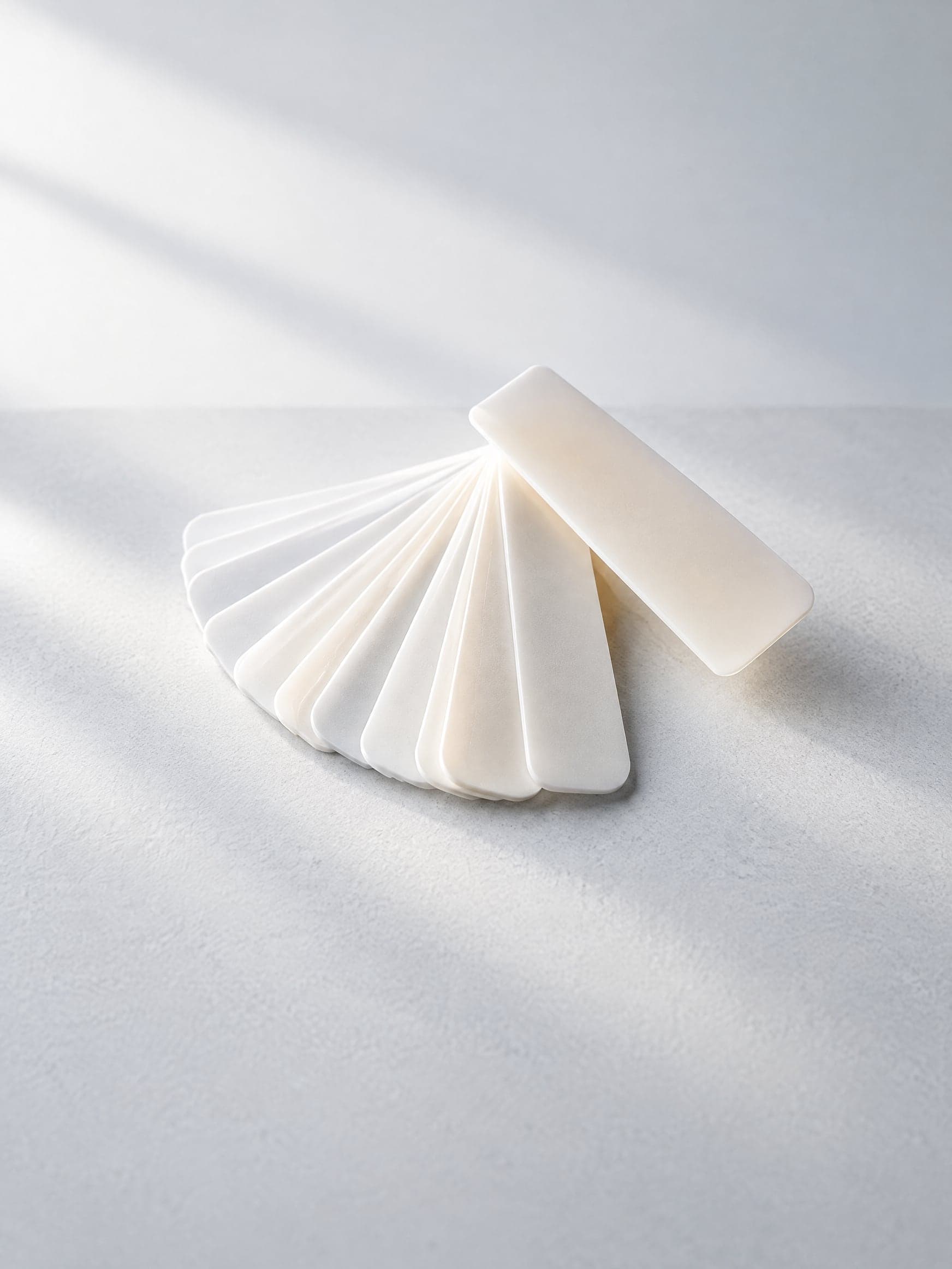
The tooth is not shaved. Before bonding, the surface is cleaned and treated with an acid etch so the bond holds well. A systematic review of studies comparing no-prep or minimal-prep veneers with the reduction-type laminate veneers common elsewhere found that the survival rate of minimal-prep veneers was not lower, and some results showed them lasting longer[1]. However, it noted that the study methods varied, so the findings should be read with caution[1]. More details are in Are no-prep veneers really not shaved at all?
When shouldn't a veneer be placed without shaving?
If a veneer is placed directly on a small tooth that is tilted forward or rotated, only the front looks thick and bulky. In that case, we do not place Brinate; we first move the tooth with orthodontics or consider a laminate veneer that reshapes it slightly within the enamel (the outer layer of the tooth) only. Shaving deeply beyond the enamel weakens the bond and shortens the lifespan[2]. In a study that followed 580 veneers for up to 12 years, 99% of those prepared only within the enamel were still in place, while those bonded to dentin (the layer beneath the enamel) were about 10 times more likely to fail[2].
On a very dark tooth, thin porcelain cannot cover it and the color underneath shows through. If there is an edge-to-edge bite, where the tips of the upper and lower front teeth meet, or tooth grinding, the thin porcelain can break first, so we address the biting force first. A 2025 meta-analysis of 29 studies covering porcelain veneers in general found that, after a little over 10 years, about 94–97% were still in place depending on the material[4]. The same analysis reported more technical problems with the porcelain itself than biological problems such as with the gums[4].
Won't it look odd if only one side is done?
If only one side is small and its color is similar to the neighboring teeth, doing just one is fine. If the difference in width or length between left and right is large, we plan the other side as well. I look at the facial midline, the position of the canines, and the gum line visible when smiling together, because if only one side is brighter and longer, the small tooth on the other side actually stands out more.
How we do it at Wonjin Dental
I don't just add width. I first look at the ratio of width and length between left and right and whether the edge line when smiling matches the face. If the conditions fit, I enlarge the tooth with Brinate, which is placed without shaving, with no anesthesia and no temporary tooth. When only one tooth is done, it has to blend with the color of the neighboring teeth, so a hand-layered option is often the right fit.
| Type | How it is made | Thickness | Time | Price (per tooth) |
|---|---|---|---|---|
| Porcelain veneer (front slightly trimmed) | Milled by machine | About 0.3mm | Same day on days when it is possible | ₩330,000 |
| Build-up | Layered by hand | 0.1mm or less | About 1 week | ₩550,000 |
| Platinum | Layered by hand | 0.1mm or less | About 2 weeks | ₩990,000 |
As of September 2026, VAT included (All fees). I also get requests to shave deeply because orthodontics feels like too much, but I do not choose methods that shave beyond the enamel.
Frequently asked questions
Can a peg tooth also be enlarged with resin?
Yes. Resin is finished in a single day and costs less, but over time it can stain and its edges can wear, so it may need to be refined again.
How many veneers do I need for peg teeth?
Often only the small teeth are done, but if the left-right proportions or color difference are large, the neighboring teeth are sometimes done as well. The number is decided by looking at the area visible when smiling.