What's the difference between scaling and gum treatment?
The biggest difference is how deep the tartar is. Scaling removes tartar stuck to the tooth surface above the gums, while gum treatment clears out tartar and inflamed tissue that have gone down under the gums. In the treatment room I often hear, “I only came in for scaling — gum treatment?” But being clean on the outside is different from being clean underneath.
| Treatment | Where it reaches | What it does | When it's usually done |
|---|---|---|---|
| Scaling | Tooth surface above the gums | Removes tartar and plaque | Gingivitis, prevention |
| Root planing | Root surfaces under the gums | Removes root tartar and smooths the surface | Early to moderate periodontitis |
| Periodontal curettage | Inner wall of the gum pocket | Removes inflamed tissue | When pockets are deep and inflammation remains |
| Open-flap gum treatment | Around the roots and bone | Removes tartar under direct view, reinforces bone if needed | When bone damage is deep |
Why does tartar damage the gums?
Because bacteria left around the tartar cause inflammation in the gums. When calcium in saliva builds up on plaque (the bacterial film that sticks to teeth), it becomes hard tartar, which won't come off with a toothbrush. It starts as gingivitis, with bleeding when you brush and slightly swollen gums.
When the inflammation moves below the gums, it becomes periodontitis, and the alveolar bone (the bone supporting the teeth) gradually gets lower. As bone is lost, the teeth become loose, and this often happens without any painful warning signs. That's why I hope you won't ignore bleeding or swelling, thinking “it'll get better.”
When is scaling alone enough?
If tartar hasn't gone below the gums, scaling is enough. This applies to gingivitis where the gum pockets (the gaps between teeth and gums) are shallow, usually 1–3mm, with slight bleeding when brushing. I don't add gum treatment in cases like these.
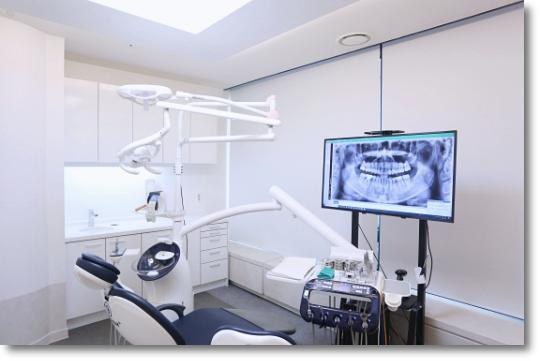
On the other hand, if the pockets have deepened to 4mm or more, or X-rays show tartar on the roots and bone loss, scaling instruments can't reach. In that case, even repeated scaling won't get the tartar out of the pockets.
What are the steps in gum treatment?
- Diagnosis: We measure the depth of the gum pockets and check bone height on X-rays.
- Scaling: Tartar above the gums is removed first.
- Root planing: Usually after anesthesia, tartar on the root surfaces is removed and the surfaces smoothed. The mouth may be divided into sections and treated in stages.
- Re-evaluation: A few weeks later, we check pocket depth and bleeding again.
- Further treatment: If inflammation remains, we consider periodontal curettage or opening the gums to look directly.
For a few days after treatment, there may be some sensitivity or slight bleeding, and as the swelling goes down, the gums may look slightly lower. The recovery process is covered separately in Why it hurts after gum treatment.
How we do it at Wonjin Dental
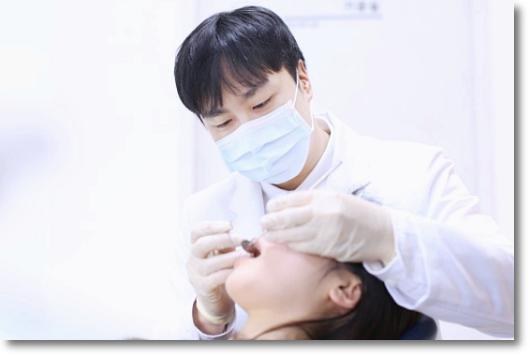
I first check where the tartar is and how deep the pockets are, and do only the treatment that matches that depth. If tartar is only above the gums, we finish with scaling; if it has gone deeper, I recommend gum treatment. Where damage reaches the bone, we open the gums to check directly and reinforce the bone if needed.
Scaling can be covered by health insurance once a year, and gum treatments such as root planing and periodontal curettage are also covered by health insurance. Scaling not covered by insurance is ₩60,000 (as of September 2026). Other fees are in the full fee list.
How can I prevent gum disease from coming back after treatment?
Tartar forms again even after it's removed, and gum disease often recurs, so care after treatment determines the result. I give the following habits the same weight as the treatment itself.
- Brushing gently 2–3 times a day, right down to the gumline
- Floss, or interdental brushes that fit the size of the gaps
- Cutting down on smoking
- Regular check-ups and scaling suited to your gum condition
Frequently asked questions
Does gum treatment hurt?
Root planing is usually done under anesthesia, so there isn't much pain during treatment. After the anesthesia wears off, there may be throbbing or sensitivity for a day or two.
My teeth feel looser after gum treatment.
As gums that were swollen with inflammation settle down, it can feel that way temporarily. It usually lessens as the gums recover, but if it keeps getting worse, it needs to be checked again.
Will receded gums grow back after gum treatment?
Gum treatment stops inflammation; it can't raise bone and gums that have already receded back to their original height. That's why it's important to treat before the bone gets any lower.