Do teeth still move with orthodontics in your 40s?
They do. Teeth move as the alveolar bone around them is resorbed and filled back in, and this process happens in adults too. “Is it too late to start now because of my age?” is a question people over 40 often ask. Movement may be a little slower than during growth, but we don’t rule it out based on age alone. In fact, quite a few people start orthodontics in their 40s and 50s.
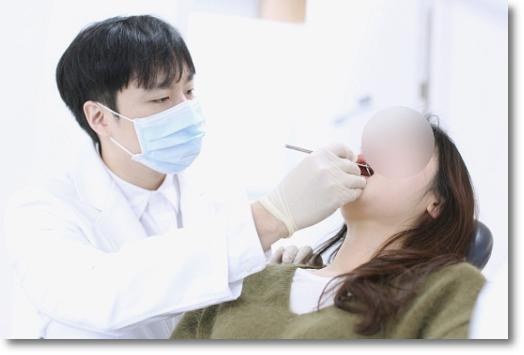
Even among people of the same age, the plan is completely different for someone with strong gums and someone whose bone has already shrunk and whose teeth wobble. So we check how much bone and gum remain with X-rays and a gum examination before talking about appliances. Even if only the front teeth look slightly overlapped from the outside, we also look at how the molars meet and whether there is a habit of chewing on one side only.
What conditions make adult orthodontics possible?
| What we check | When we proceed | When we postpone |
|---|---|---|
| Gums | Inflammation has settled | Bleeding or swelling remains |
| Alveolar bone | Bone surrounding the roots remains | Bone has shrunk a lot and teeth wobble |
| Roots | Long enough | Already short, with a high risk of getting shorter |
| Bite | Upper and lower teeth can be aligned together | Only one tooth touches first |
If there is tartar deep under the gums, scaling that only removes surface tartar isn’t enough, so we first calm the inflammation with gum treatment. Applying force on swollen gums makes the bone shrink further and the teeth wobble more.
How long does orthodontics take in your 40s?
Partial orthodontics that moves only a few front teeth usually takes 6 months to 1 year, and full orthodontics often takes around 1.5 to 2.5 years. Adults may move more slowly, so we don’t promise unreasonably fast treatment. The appliance is chosen between brackets and clear aligners to suit the amount of movement and your lifestyle. Brackets often suit cases where the bite needs to change a lot, and clear aligners often suit cases with little movement where you can keep up the wearing time. Adults often have a mix of previously treated teeth, missing teeth and worn teeth, so we decide the order of orthodontics together with any crown or implant plans.
When is orthodontics not recommended?
If periodontitis is active, we don’t start moving teeth. If the roots are already short and further root resorption (roots getting shorter) is a concern, we don’t recommend forcing a full movement. Nor do we promise fast movement in a mouth with weak bone. If something can’t be done, we tell you that up front.
If the gums are weak and moving the teeth looks likely to weaken them further, we also look at ways to address alignment and color from the front surface. However, applying veneers to badly misaligned teeth requires a lot of grinding, so we don’t place thin porcelain on protruding teeth. Nor do we claim that orthodontics can restore receded gums.
How we do it at Wonjin Dental
In a consultation, rather than age, I first look at gum bleeding, whether the bone surrounds the roots, and whether the upper and lower teeth press on one spot. In adults, food tends to collect around the appliance, so we build brushing, flossing and scaling intervals into the plan, check the gums every 3–6 months during treatment, and also talk about wearing a retainer after it ends. Orthodontic diagnosis and the price of each appliance are published in all fees. More on adult orthodontics in general is in Can adults get orthodontics too?
Frequently asked questions
Can I get orthodontics in my 50s?
It’s possible if your gums and alveolar bone can support it. The older you are, the more gum condition varies, so we examine more thoroughly and often plan to move only the teeth that need it.
Can I get orthodontics if I have crowns or implants?
Teeth with crowns can be moved using a different way of attaching the appliance. Implants are fused to the bone and don’t move, so we use them as fixed reference points when planning.
Will orthodontics in my 40s interfere with work?
Clear aligners and tooth-colored brackets tend not to stand out in conversation. For the first few days you may feel some soreness or your speech may feel awkward, but most people adapt quickly.
Does orthodontics weaken the gums?
Applying strong force where the bone is weak can make it shrink further. That’s why we look at the gums first and build scaling and gum checks into the plan during treatment as well.