How much tooth is ground down for each treatment?
The area and amount differ for each treatment. The figures below are textbook ranges, and even the same treatment varies depending on the current position of the tooth and the shape you want.
| Treatment | Area reduced | Typical reduction | Reason |
|---|---|---|---|
| Brinate (no-prep veneer) | No grinding | 0mm | The porcelain placed on top is thin, at 0.1–0.3mm |
| Regular porcelain veneer | Front surface | Usually 0.3–0.7mm | Makes room for the thickness of the porcelain |
| Crown | All the way around the tooth | Around 1–1.5mm on the sides, 1.5–2mm at the edge and chewing surface | Wraps the tooth so it can take chewing force from all sides |
Why does it matter whether grinding stays within the enamel?
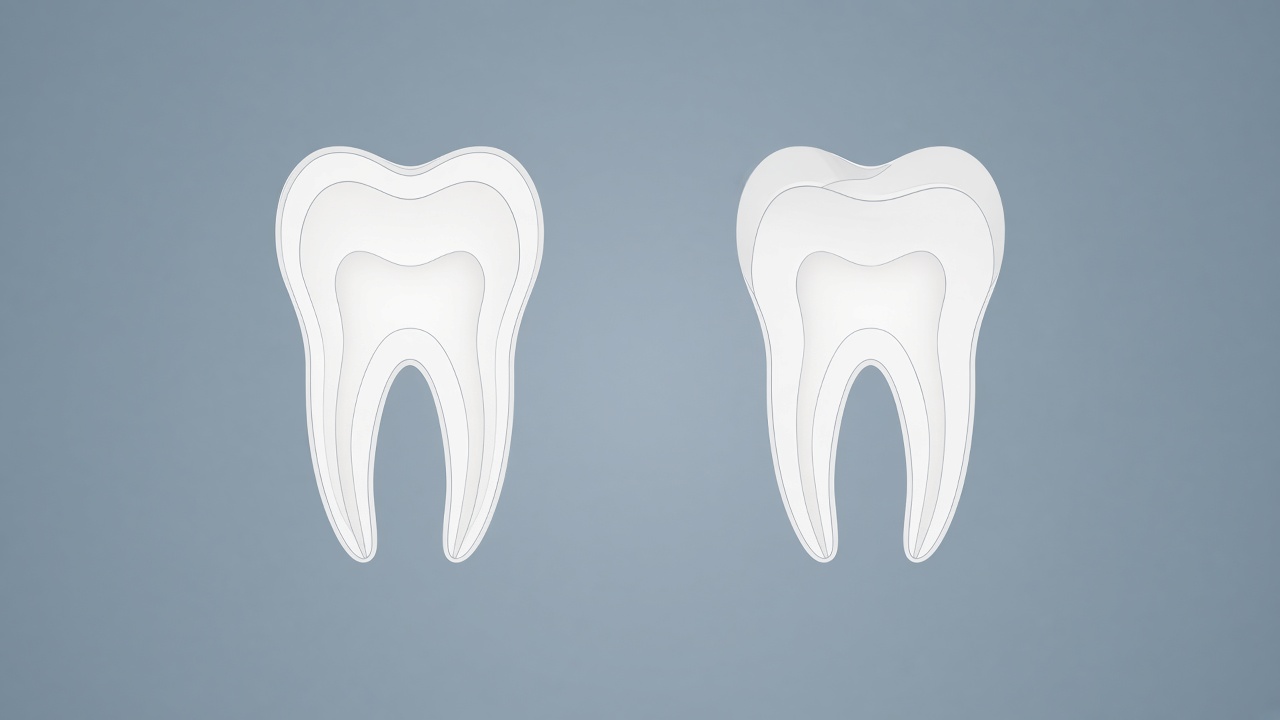
Because enamel, once ground away, doesn’t grow back. The outside of a front tooth is enamel (the hardest outer layer), inside that is dentin, and further inside is the nerve. The enamel on the front of the front teeth is especially thin near the gums, and in some places it is less than 0.5mm.
If the reduction ends within the enamel, the tooth keeps its own walls and bonding works well. If the dentin is exposed, the tooth becomes sensitive and bonding weakens, so that surface is hard to leave uncovered. That’s why, when you ask about the amount of reduction, what matters isn’t whether it hurts today but what you will have to keep covered from then on.
How is Brinate placed without grinding?
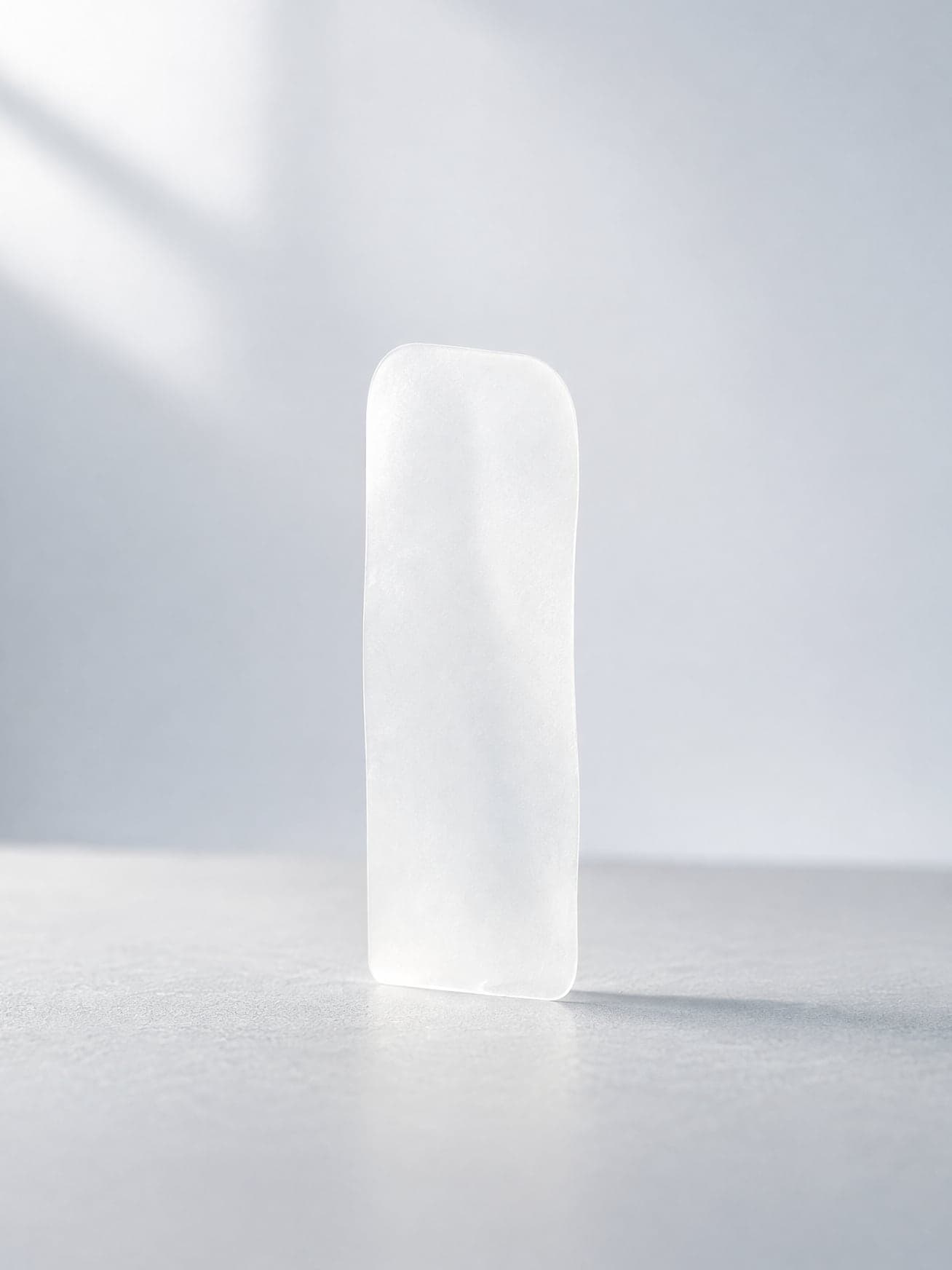
Because the porcelain placed on the tooth is made very thin. Brinate leaves the front surface as it is and places thin porcelain on top, so there is no anesthesia and no temporary tooth while you wait. The pressed Basic is around 0.3mm, and the hand-built Build-up and Platinum are 0.1mm or less; only the method, thickness and timeline differ. The difference from regular porcelain veneers is summarized in a table in the difference between no-prep veneers and regular porcelain veneers.
How do I decide between porcelain veneers and a crown?
It depends on how far the tooth currently protrudes, how much of its walls remain, and whether there are chipped or filled areas. A porcelain veneer covers only the front surface, and the sides, back and chewing surface of the natural tooth remain. A crown wraps the tooth when the walls are insufficient, after root canal treatment, or when a large area is broken. If a single front layer can’t hold up, we look at a front tooth crown.
If the edges of the front teeth have worn with age or old composite fillings are large, enamel has already been lost, so there is less room to grind even with the same treatment. That’s why I look at the thickness of the remaining enamel before the name of the treatment.
Do you place no-prep veneers on teeth that stick out?
No. Placing a thin layer on a tooth that protrudes a lot makes it look even more protruding, makes the gumline area look thick, or makes it hit the lower teeth first when you close your mouth. If something can’t be done, we tell you that up front.
On the other hand, for a tooth that sat further back, the thin layer’s thickness brings it into line with the neighboring teeth. Even the same 0.1mm gives different results depending on where the front surface currently sits. If a protruding mouth is your concern, see protruding mouth and porcelain veneers first.
How we do it at Wonjin Dental
On the day of a treatment that involves grinding, I hand you a mirror. A temporary tooth prevents sensitivity and holds the shape, but it also hides how much was ground down. So on days when we grind for porcelain veneers or crowns, I show you before and after grinding right away, and place the temporary tooth only after you have checked. This is so the amount of reduction isn’t left as words alone.
Frequently asked questions
Do ground teeth go back to how they were later?
They don’t. Ground front teeth need to keep a covering, and each time the covering is replaced, they may be trimmed a little more.
Does it hurt when teeth are ground down?
Within the enamel there is almost no sensation, but as it gets closer to the dentin it can be sensitive, so we use anesthesia depending on how much is ground. Some people have sensitivity for a few days afterward.
Can a tooth that had a crown be changed to a porcelain veneer?
A tooth that has already been ground all the way around can’t be covered with a single front layer, so it is done as a crown again. That’s why we look carefully at the area of reduction when choosing the first treatment.
Only one front tooth is chipped — do I need a crown?
If the chipped area is small, it can be filled with composite or just the front surface covered with a porcelain veneer. We look at a crown when a large part of the wall is gone or the damage has reached the nerve.