No-prep veneers vs. reduction-type laminate veneers at a glance?
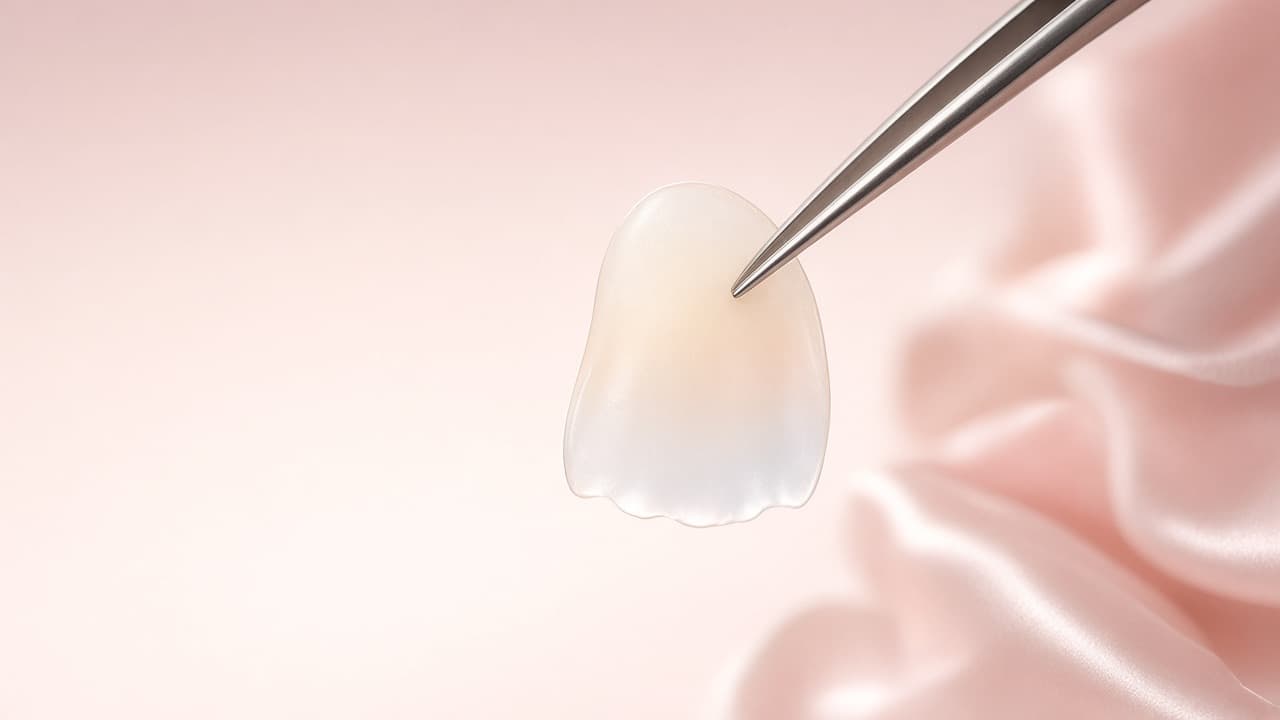
Both use porcelain as the bonded material; what differs is whether the teeth are shaved first. A no-prep veneer is placed without shaving, and at Wonjin Dental we call it Brinate. No-prep is about whether the tooth is shaved; build-up is about how the veneer is made. Brinate is a build-up laminate, layered one sheet of porcelain at a time, so it is 0.1mm or thinner, and because it is that thin, the tooth is not shaved.
| Category | Reduction-type laminate veneers | No-prep veneers (Brinate) |
|---|---|---|
| Before bonding | The front enamel is shaved | No shaving |
| Bonding surface | Shaved enamel, or dentin if deep | Unshaved enamel |
| Anesthesia | Used depending on how much is shaved | Not used |
| Temporary tooth | Covers the teeth while waiting | None |
| When it is not done | Teeth whose enamel is too thin | Teeth that stick out forward, skeletal protruding mouth |
Do they bond well to unshaved teeth?
Yes, unshaved enamel (the outer layer of the tooth) is a surface that bonds well. Brinate is bonded directly onto the original outer layer. However, biting off hard food with the front teeth can make it come off or chip, so you only need to avoid that, and porcelain that comes off is bonded again. A 2023 systematic review comparing conventional porcelain veneers with minimal-prep and no-prep veneers reported higher survival rates for minimal-prep and no-prep veneers, but added that the study methods varied, so the findings should be interpreted with caution[1]. Seoul National University Hospital's medical information also advises avoiding biting into apples or gnawing corn off the cob with your front teeth after porcelain veneers[4].
Reduction-type laminate veneers bond well too. However, if the tooth is shaved deeply and the dentin (the layer beneath the enamel) is exposed, bonding to that surface is weaker than to enamel, and sensitivity may remain. In a retrospective study that followed 580 veneers for up to 12 years, those bonded to dentin or with margins extending onto dentin were about 10 times more likely to fail than those bonded to enamel, and the survival rate for those shaved only within the enamel was 99%[2]. The more that is shaved, the more it becomes not a thin covering but a covering that hides a shaved tooth. I have summarized how much tooth is removed for each treatment in Comparing how much tooth is removed.
Don’t no-prep veneers make front teeth look thick?
It depends on how they are made. Brinate is layered by hand and is thinner than one sheet of paper. A machine-milled porcelain veneer is about three or four sheets of paper thick, so the front of the tooth is trimmed slightly before bonding.
| Type | Thickness / fabrication | Time | Price per tooth |
|---|---|---|---|
| Porcelain veneer (front slightly trimmed) | About 0.3mm, machine-milled | Same day on days when it is possible | ₩330,000 |
| Build-up | 0.1mm or less, layered by hand | About 1 week | ₩550,000 |
| Platinum | 0.1mm or less, layered on platinum foil | About 2 weeks | ₩990,000 |
As of September 2026, VAT included (cosmetic treatment). All items are in Full fee list.
The edges are even thinner than this, so no ledge is visible at the gum line. If a tooth originally sat inward, that thickness actually brings it in line with the neighboring teeth. Conversely, on a tooth that already sticks out, even a thin veneer makes it look more prominent, so we do not place it. I have covered this further in Do no-prep veneers look thick?
How we do it at Wonjin Dental
There are usually two visits. On the first day we decide on color and shape and take an impression, and the finished porcelain is bonded at the next visit. Since nothing is shaved, you simply go about with your own teeth while waiting, without a temporary tooth. A machine-milled porcelain veneer needs the front trimmed slightly, but on days it works it can be bonded the same day. The two Brinate types match the color from the inside rather than painting it on the surface, and Platinum is layered on platinum foil so the edge at the gum side tapers off finely. For teeth where it will not work, I tell you so first.
Frequently asked questions
How long do no-prep veneers last?
Porcelain veneers are known to often last 10 years or more, depending on care. A 2025 meta-analysis of 29 studies on porcelain veneers found survival rates of about 94–97% over an average of 10.4 years, depending on the material. However, the same analysis reported that repairs for problems such as fracture or chipping were not uncommon, depending on the material[3]. If you grind your teeth or have a habit of biting hard things with your front teeth, they last less, and Brinate that comes off can be bonded again.
Can anyone get no-prep veneers?
No. We do not place them on teeth that stick out forward, a skeletal protruding mouth, or severely overlapping teeth, and we look first at orthodontics or other methods.
Are no-prep veneers sensitive too?
Because nothing is shaved, the dentin is not exposed, so there is generally less concern about sensitivity than with reduction-type laminate veneers. Some people feel briefly sensitive right after bonding. Seoul National University Hospital's medical information also explains that teeth may be sensitive for the first week after porcelain veneers are bonded but gradually improve, and that shaving too much can cause sensitivity[4].
What should I do if Brinate comes off?
Do not throw away the porcelain that came off; keep it and bring it in. If it is not broken, we clean the surface and bond it again; if it is broken, we make a new one. If you have a habit of biting hard things with your front teeth, it is good to cut back on that first.