How do you use a Waterpik?
The basics are to start at low pressure and move slowly along the gum line. “Doesn’t stronger pressure clean better?” In the treatment room, I actually see people who come in with damaged gums from using high pressure.
- Fill the reservoir with lukewarm water. Water that is too cold or too hot irritates the gums.
- Set it to the lowest level, put the nozzle in your mouth, and then turn it on.
- Lean slightly over the sink and keep your mouth a little open so the water can run out.
- Aim the nozzle at the border where the teeth meet the gums, and move slowly from the back teeth to the front teeth.
- Pause briefly between teeth to let the stream pass through, and do both the outer and inner sides.
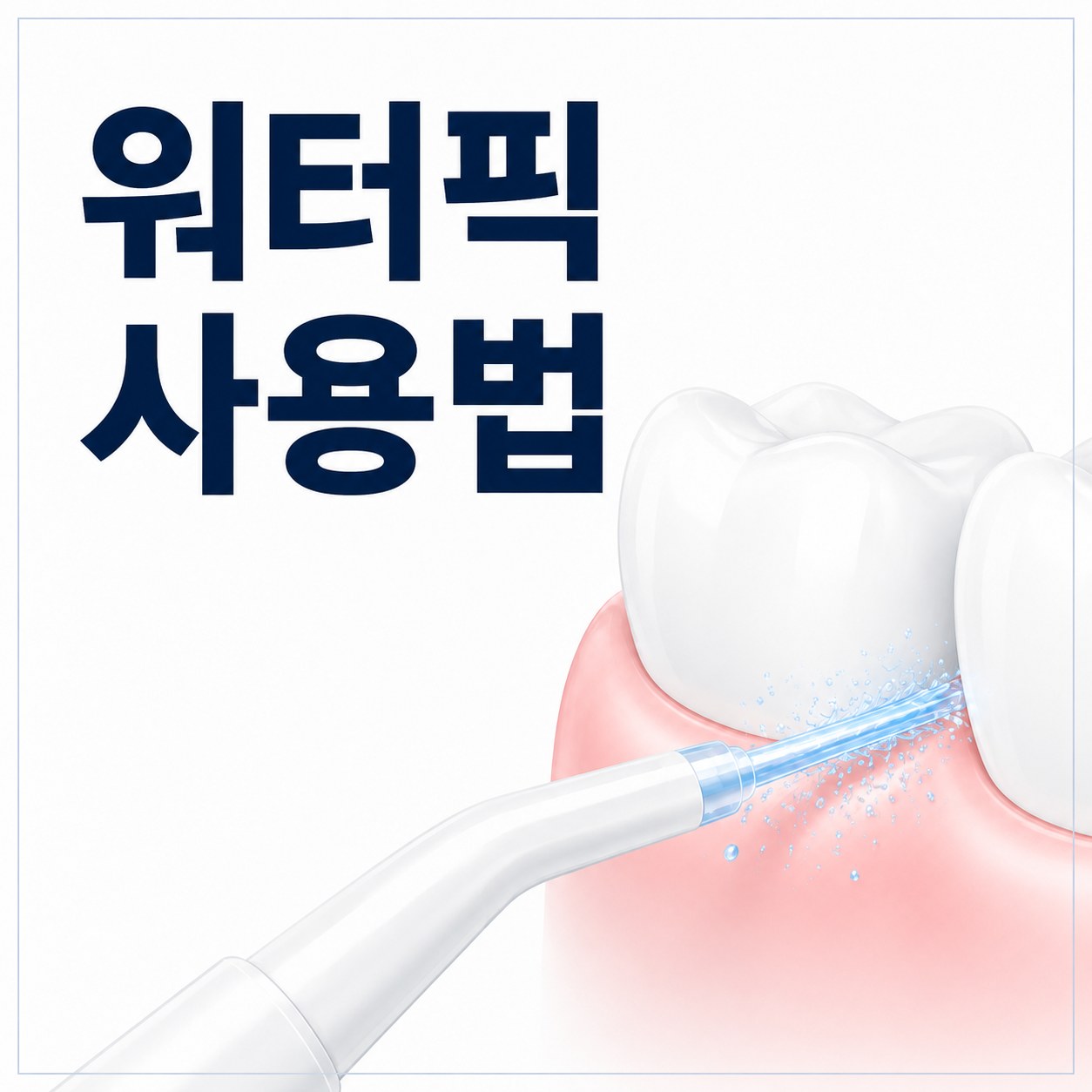
Don’t aim a strong stream at one spot for a long time; it should feel like sweeping along the gum line. Even after you get used to it, only raise the level as far as your gums are comfortable. One to two minutes is enough to go around the whole mouth, and spraying longer does not make it cleaner.
For the first few days, there may be a little bleeding from the gums. This often happens when gums that were already inflamed are stimulated, and it tends to decrease with regular use. If the cause is the strong pressure, lower it by one level.
Can a Waterpik replace floss?
No, it cannot. A Waterpik cleans by rinsing with water, while floss and interdental brushes clean by directly touching the tooth surface.
| Tool | What it does well | Limits |
|---|---|---|
| Waterpik (water flosser) | Removes trapped food and loose debris | Cannot fully remove plaque stuck to surfaces |
| Floss | Removes plaque from tight spaces | Awkward for wide gaps and under restorations |
| Interdental brush | Removes plaque from open spaces and around implants | Does not fit into narrow gaps |
Use them together according to the spacing between your teeth and the condition of your gums. How to choose an interdental brush is covered in how to use an interdental brush.
Who benefits most from a Waterpik?
It helps in mouths with complex structures where a toothbrush alone leaves some surfaces missed.
- People who often get food stuck around orthodontic brackets and wires (including partial orthodontics)
- People who get food stuck under an implant or bridge
- People whose gums have receded, widening the spaces between teeth
- People who find flossing difficult because they have trouble using their hands (even then, it is a supplement)
What should you avoid when using a Waterpik?
- Using the strongest level from the start
- Concentrating the stream on one spot for a long time
- Using water that is too cold or too hot
- Using it right after gum surgery or a tooth extraction without guidance
- Using only a Waterpik and skipping floss and interdental brushes
How we do it at Wonjin Dental
When patients say they bleed after using a Waterpik, we check whether tartar and plaque have built up, whether there are areas where the gums are swollen or the pockets have deepened, and whether a restoration is shaped in a way that traps food easily. If bleeding or swelling keeps recurring in the same spot even after lowering the pressure, it is not just a matter of technique. Around an implant, we also check whether it is peri-implantitis. Knowing which areas of your mouth are not getting cleaned well comes before which tool you use, so at checkups we point out those spots.
Frequently asked questions
How many times a day should I use a Waterpik?
Once a day, when brushing in the evening, is often enough. If you have orthodontic appliances and food gets stuck often, you can also use it after meals. It is better to use it carefully along the gum line once than to increase how often you use it.
Should I use it before or after brushing?
There is not much difference. Using it first removes trapped food and makes brushing easier, while using it afterward rinses away leftover debris. What matters is consistently sticking to whichever order is comfortable.
Can I put mouthwash in instead of water?
Recommendations differ by product, so check the user manual first. Strong mouthwash can damage the device or irritate the gums, so if you do use it, diluting it is safer.
How do I take care of the Waterpik nozzle and reservoir?
After use, empty any remaining water from the reservoir and let it dry. Standing water makes it easy for bacteria to grow. Replace the nozzle every few months according to the product instructions, and don’t share nozzles among family members.