How do I choose an interdental brush size?
The right size goes in without force while the bristles lightly touch the tooth surfaces on both sides. If it passes through too loosely, it is too small to clean the surfaces, and if you have to push to get it in, it is too large and damages the gums. Size labels like SSS, SS, S, and M differ by manufacturer, so choosing by how it feels going in is more accurate than going by the label.
| How it feels going in | Size judgment |
|---|---|
| Passes loosely and barely touches the surfaces | Too small. Go up one size |
| Passes with light resistance and the bristles touch both surfaces | Just right |
| Needs force to go in, or stings | Too large. Go down one size |
In the clinic, I see many people using only one size for both front teeth and molars. The width of the spaces between teeth differs by area, so it is common for one person to need two or more sizes.
How do I insert an interdental brush?
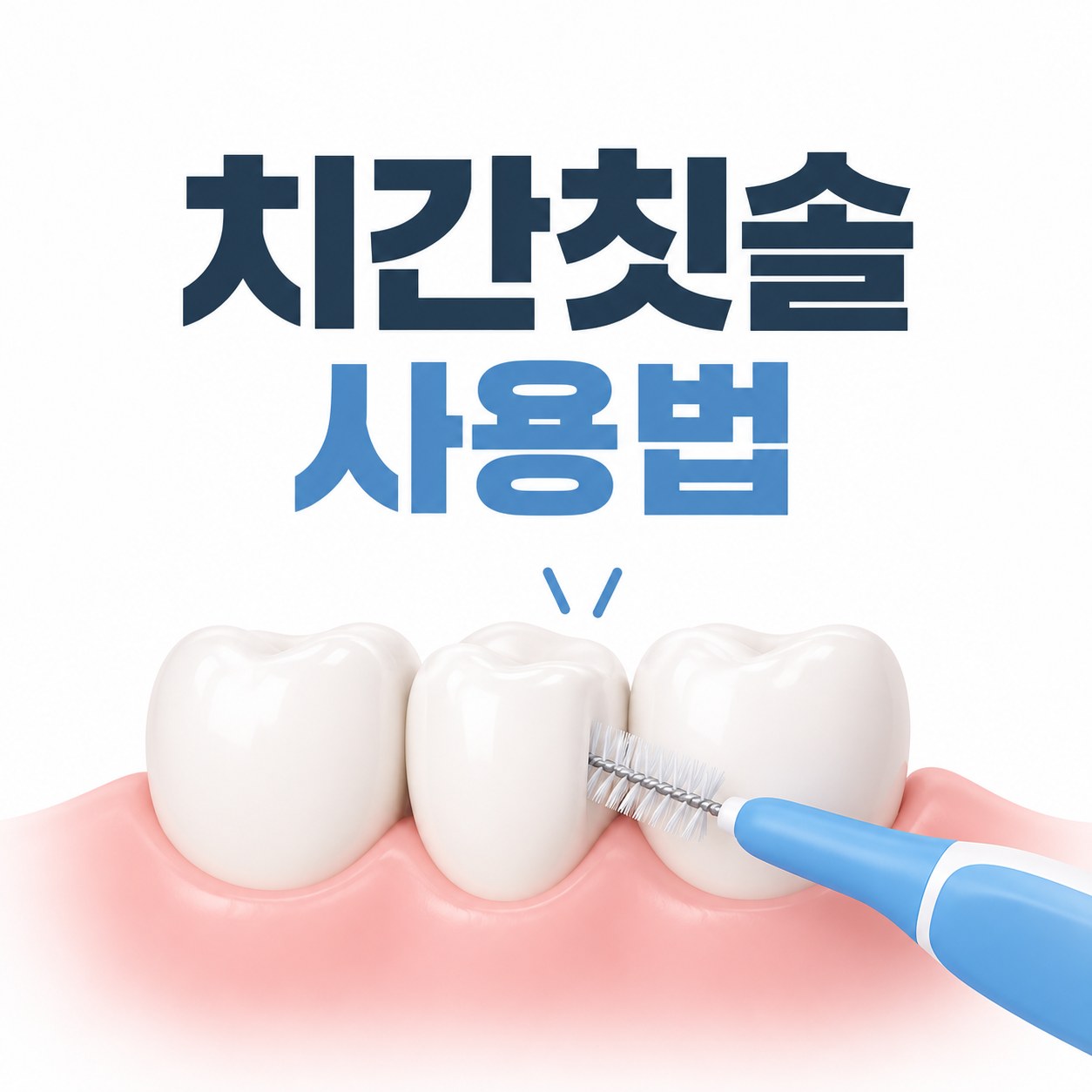
Don’t jab it toward the gums; insert it along the passage between the teeth. Think of it as going through a small tunnel.
- Look in a mirror and find the entrance between the teeth.
- Rest the tip of the brush lightly at the entrance, relax your hand, and pass it through slowly.
- Move it back and forth two or three times in short strokes so the bristles brush both tooth surfaces.
- After use, rinse it with water and let it dry thoroughly.
If it does not go in easily, do not push harder; change the angle or size. Using it gently once every day protects the gums better than using it hard many times.
For the back teeth, gently pulling your lip aside with a finger to expose the entrance makes it easier to insert. After inserting it once from the outside, if the spot can also be reached from the inside (tongue side), insert it once more from the opposite direction so both surfaces are cleaned evenly.
Floss or interdental brush: which goes where?
Floss suits tight gaps, and an interdental brush suits spots with open space. Neither is the better tool; they are suited to cleaning different areas.
| Area | Suitable tool |
|---|---|
| Between tight front teeth | Floss |
| Spaces opened by receding gums | Interdental brush |
| Around implants and bridges | Interdental brush (with a water flosser as a supplement if needed) |
| Next to orthodontic appliances | Interdental brush |
The difference from tools that rinse with a stream of water is summarized separately in How to use a Waterpik.
Should I stop using an interdental brush if my gums bleed?
Don’t stop right away just because it bleeds once or twice. If the gums are inflamed, they bleed even with light stimulation, and in many cases this decreases with steady use over a few days. If a particular spot stings every time you use it, the size is too large or you are using too much force.
If bleeding keeps happening in the same spot, with swelling or pain, bad breath gets worse, and food keeps getting stuck in one place, don’t just change the brush; check whether you need gum treatment.
How we do it at Wonjin Dental
We don’t just take note that you are bleeding; we also look at where it is bleeding, whether there is tartar, how much inflammation there is, and whether the size you are using now is right. If bleeding keeps happening in the same spot, we don’t just change the brush. If the spaces look wider than before, we don’t simply blame the brush; we check whether the gums have receded and for periodontal disease.
Frequently asked questions
Does using an interdental brush widen the gaps between teeth?
If you use the right size gently, the teeth are not pushed apart. In many cases, as the swelling goes down, gaps that were already there become visible.
Should I use it before or after brushing?
Using it once a day matters more than the order. If you use it before brushing in the evening, the toothbrush can easily pick up the debris that comes loose.
How often should I replace an interdental brush?
Replace it right away when the wire bends or the bristles splay. A bent wire can easily scratch the gums. Drying it before storing lets you use it a bit longer, but don’t share it with family. The sizes differ, and it is not hygienic.
How do I-shaped and L-shaped brushes differ?
I-shaped (straight) brushes are convenient for front teeth that are easy to reach, and L-shaped brushes for molars where it is hard to get the angle. Depending on the size of your mouth and how you use your hands, you can use both.