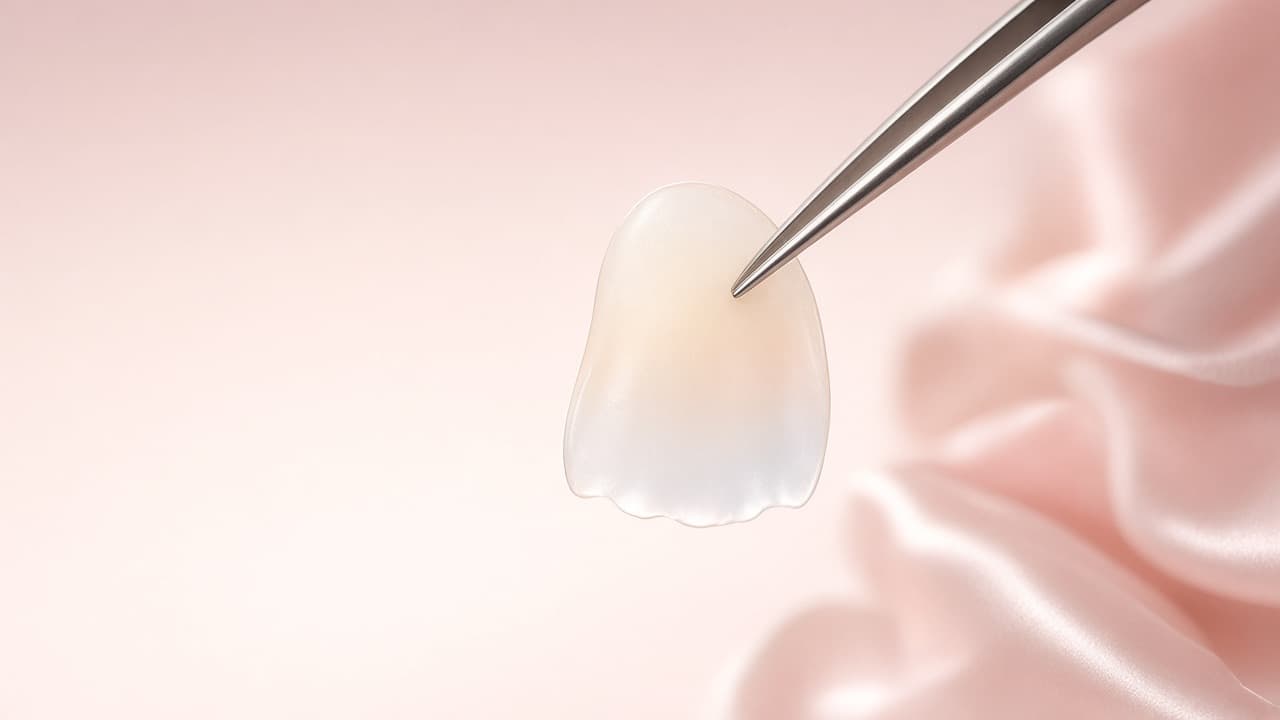
What types of porcelain veneers are there?
They are divided by material and by how they are made. I often hear the question “They have the same name, so why are they so different?” Even with the same name, the way they are made is different. Milling a block and building up powder layer by layer before firing differ both in process and in the character of the result.
| What to look at | Machine-milled | Hand-layered |
|---|---|---|
| Method | A ceramic block is milled by machine | A technician builds up porcelain powder layer by layer and fires it |
| Color | An even, simple tone | Easier to show layers: translucent at the edge, deeper toward the gum |
| Thickness | Relatively thick | Can be made thinner |
| Time | Short (same day possible) | Longer (1–2 weeks) |
The hand-layered kind is called a build-up laminate: a veneer made by brushing on porcelain powder one layer at a time and firing it again and again.
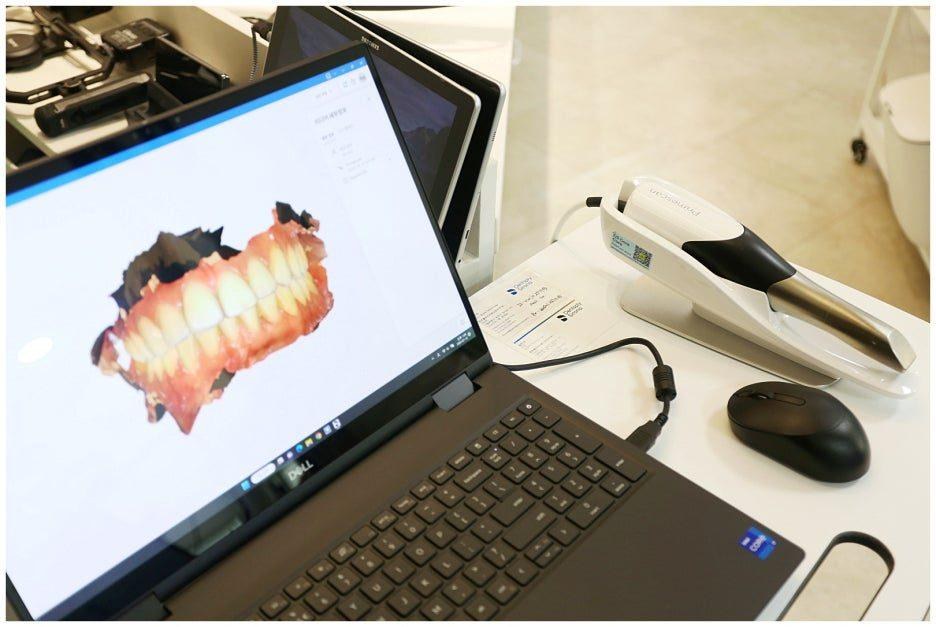
How we do it at Wonjin Dental: Brinate types and prices
Brinate at Wonjin Dental is placed on the tooth without trimming it. There is no anesthesia and no temporary tooth.
| Type | Fabrication | Thickness | Time | Cost per tooth |
|---|---|---|---|---|
| Porcelain veneer (front slightly trimmed) | Machine-milled | About 0.3mm | Same day on days when it is possible | ₩330,000 |
| Build-up | Hand-layered | 0.1mm or less | About 1 week | ₩550,000 |
| Platinum | Hand-layered | 0.1mm or less | About 2 weeks | ₩990,000 |
As of September 2026, including VAT (cosmetic treatment). Fees for other treatments are on All treatment fees. Not trimming the teeth does not mean less work goes into making them. The thinner they are made, the more handwork they take.
Why does the same porcelain veneer cost different amounts at different clinics?
Because the process included in the price is different.
- How it is made: machine milling or hand layering
- Design time: time spent drawing the shape while considering the lip line, the gum visible when smiling, the current tooth color, and the bite
- Color matching: how many times it is held against the teeth before bonding, and whether it is remade if the color does not match
- Aftercare adjustments: how far bite adjustments and checkups after bonding are included
Cheaper does not necessarily mean problems, and more expensive does not always mean a satisfying result. If you only line up the numbers, you end up comparing different treatments as if they were the same. In a meta-analysis of porcelain veneer studies, the most common problem was fracture or chipping at the edge (about 4%), and debonding occurred in about 2%[1]. That is why you should also look at how far bite adjustments and checkups after bonding are included. I also covered this topic in Why do prices differ for the same procedure?.
Are hand-layered veneers always better?
No. For teeth with little color difference from the neighboring teeth, where a simple tone is enough, machine-milled veneers also look natural. Hand layering has the advantage when the veneer needs to be thinner, when the depth of color needs to match the neighboring teeth, or when the translucency at the edge needs to be preserved. In consultation, I first tell you whether to mill or layer based on the color and position of the tooth.
Time is also considered. If you have a fixed date such as a wedding or job interview, a porcelain veneer, bonded the same day on days when it is possible, may be right; if you have time and the depth of color matters, the hand-layered option that takes about 1 or 2 weeks is better. Either way, we hold it against the teeth to check the color and shape before bonding.
If it is cheaper, is less tooth trimmed?
No. Whether to trim is decided by the position of the tooth, not the price. If the tooth sits inward and there is space, we place the veneer without trimming; if it sticks out, we do not place one. We also do not bond them for a skeletal protruding mouth. If something cannot be done, I tell you it cannot be done with any type. The relationship between price and no-prep is summarized in Should I choose no-prep based on price alone?.
Frequently asked questions
What should I ask when comparing quotes?
Ask how they are made, how much each tooth is expected to be trimmed and why, the color matching process, and how far adjustments after bonding are covered. Comparisons are only meaningful under the same conditions.
Are porcelain veneer prices per tooth?
In most cases, they are charged per tooth. How many to do is decided by the range visible when you smile and left-right symmetry, so the total cost depends on the number of teeth.
Are same-day veneers lower in quality?
It is less that the quality is lower and more that the way color is expressed is different. Because they are made by machine, the color layers tend to be simpler; for teeth where the conditions fit, that is enough, and for teeth where the depth of color matters, I recommend hand layering.
Does lifespan differ by fabrication method?
Lifespan depends more on the bonding, bite, teeth grinding, and care than on the fabrication method. In a meta-analysis of 13 studies of porcelain veneers, about 89% remained at a median follow-up of 9 years, and the type of porcelain did not affect the failure rate[1]. A 2025 meta-analysis of 29 studies also found about 94–97% remaining by material at just over 10 years, with no difference in survival between materials[3]. With either method, if the veneer bonds well to the enamel and force is not concentrated in one spot, it lasts a long time. A literature review of veneer studies also found that the wider the area of exposed dentin (the layer under the enamel), the more the success rate dropped[2].