What should I be careful about on the day porcelain veneers are bonded?
On the day of bonding, it's best to avoid hard or sticky foods. The adhesive is hardened with light and becomes firm right away, but on the first day you're not used to the thickness and bite of the new teeth, so it's easy to bite down hard without thinking. If you had anesthesia for the reduction-type laminate veneers common elsewhere, put off eating for 1–3 hours until sensation returns.
For the first few days, your front teeth may feel thick and your “s” sounds may seem to whistle. You usually get used to it within 1–2 weeks, and if a spot keeps catching on your tongue or lips, we'll smooth it.
Which foods should I avoid after porcelain veneers?
Porcelain veneers are relatively strong against force pressing up and down, but weak against force that suddenly concentrates on the front-tooth edges and against twisting force. So how you chew with your front teeth matters more than the food itself. A meta-analysis of ceramic veneer studies also found that the most common problem was fracture or chipping (about 4%)[5].
| Category | Examples | How to eat them |
|---|---|---|
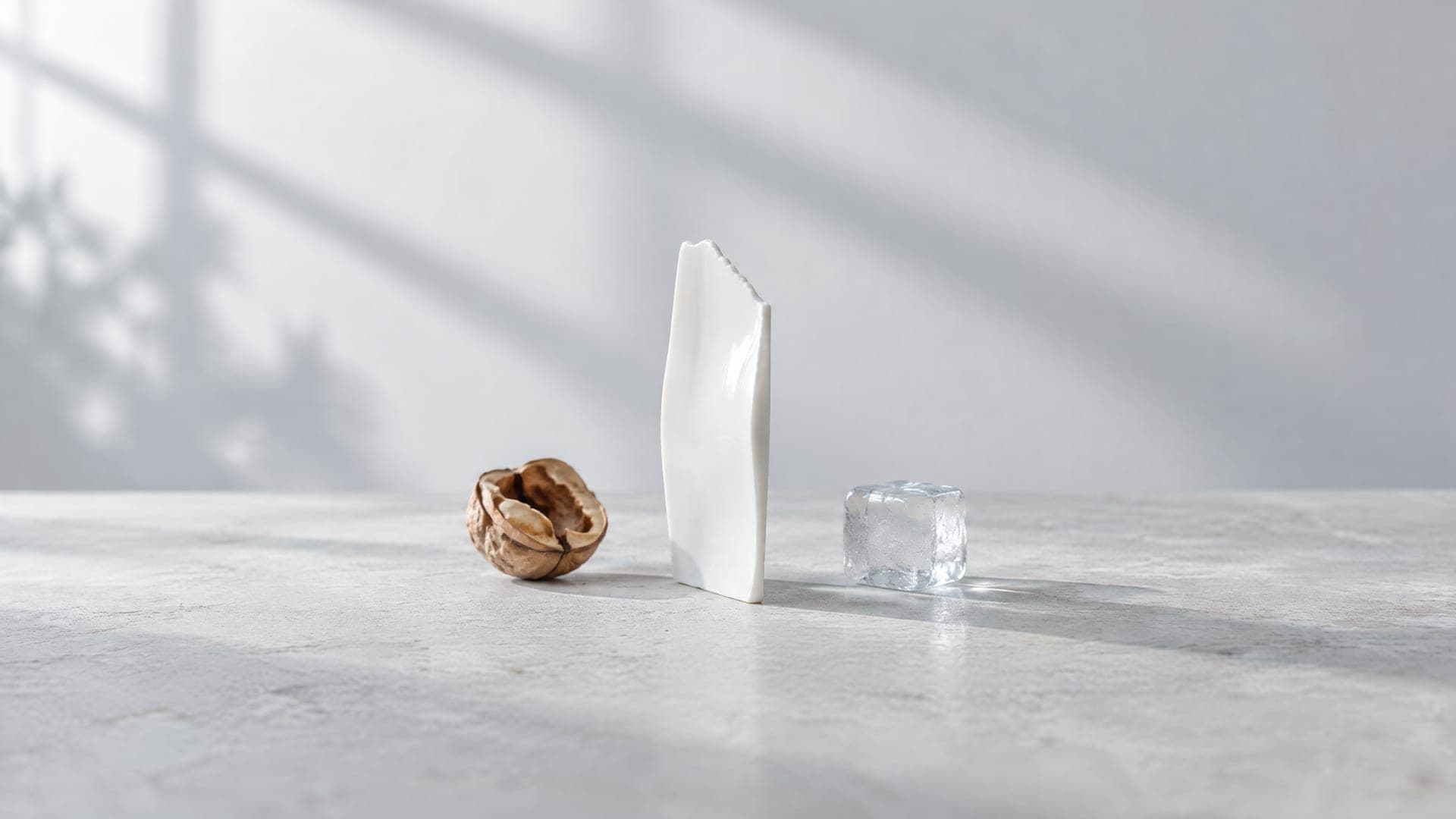
| Hard things bitten with the front teeth | Ice, hard candy, nut shells, bones | Avoid |
| Tough things torn with the front teeth | Ribs, dried squid or filefish jerky, beef jerky, baguettes | Cut up and chew with the back teeth |
| Things bitten into whole | Whole apples, corn on the cob | Slice them, or take the kernels off |
| Sticky things | Caramel, Korean taffy (yeot) | Avoid for the first few days after bonding |
| Staining drinks and foods | Coffee, black tea, red wine, curry | Rinse with water afterward |
Ceramic itself doesn't stain easily, but the adhesive line at the margin and the surrounding natural teeth do. In the same meta-analysis, severe discoloration at the edges was about 2%[5]. Resin veneers yellow more easily with coffee and smoking.
Habits like opening bottle caps, biting your nails, or chewing on pens also concentrate force on the front-tooth edges and cause chipping. They're bad habits for your teeth even without veneers.
How should I brush and floss with porcelain veneers?
Brush as usual, but use a soft toothbrush and sweep along the gumline. Whitening toothpastes with lots of abrasives can dull the surface shine, so regular toothpaste is better. You can floss — in fact, it's best to floss every day so plaque (bacterial film) doesn't build up at the margins. There is also a Cochrane systematic review finding that adding floss or interdental brushes to brushing reduced gum inflammation or plaque compared with brushing alone[2]. However, most were short-term studies, so the certainty of the evidence was low[2].
- Toothbrush: soft bristles, angled 45 degrees toward the gums, with small movements
- Floss: ease it in slowly with a sawing motion, and pull it out sideways to reduce catching
- Interdental brush: only where there are gaps, in a size that fits the gap (How to use an interdental brush)
- Water flosser: a supplementary tool that doesn't replace brushing and flossing (How to use a water flosser)
Can I not get porcelain veneers if I grind my teeth?
You can get porcelain veneers even if you grind your teeth, but without a guard worn at night, the risk of chipping or debonding increases[1]. In a study of 323 porcelain veneers, 8 of 13 fractures and 22 of 29 debondings occurred in people who grind their teeth, and wearing a night guard reduced the risk of fracture[1]. If your jaw feels stiff in the morning or family members have told you they hear you grinding, let us know at the consultation. Wonjin Dental's night guard is ₩500,000 (as of September 2026).
If you play sports involving balls or body contact, consider a sports mouthguard as well. A 2025 study pooling 9 systematic reviews found that mouthguards reduced injuries in which teeth are knocked out or broken, and custom-made ones protected better[4]. However, the level of evidence in some of the literature was low[4]. Front-tooth injuries commonly happen during sports, veneers or not.
How we do it at Wonjin Dental
What Wonjin Dental mainly does is Brinate, placed without trimming, so no anesthesia is used. There's no need to put off eating because of numb lips, but the care principle of not biting through food with your front teeth is the same as for reduction-type laminate veneers.
At regular check-ups, we check for staining at the margins, lifted spots, and the bite, and clean tartar from the margins with scaling. Those aged 19 and over can get health-insurance scaling once a year.
Frequently asked questions
Can I drink coffee after getting porcelain veneers?
Yes. Ceramic doesn't stain easily, but the margins and natural teeth can, so it's good to rinse once with water after drinking. Using a straw reduces how much reaches your front teeth.
Can I use an electric toothbrush?
Yes. A Cochrane systematic review of 56 trials found that electric toothbrushes reduced plaque and gum inflammation slightly more than manual toothbrushes[3]. Don't press hard; place the bristles at the gumline and move them slowly. A pressure indicator helps break the habit of brushing too hard.
What should I do if a porcelain veneer comes off?
Don't throw it away; put it in a clean container and come to the clinic as soon as possible. If it has no cracks and the tooth is fine, it can sometimes be rebonded. The exposed tooth may be sensitive, so avoid chewing on that side in the meantime.
Can I get porcelain veneers while wearing an orthodontic retainer?
Yes. However, if a fixed retainer is bonded behind the front teeth, the veneer thickness and bite have to be calculated together. If you're planning veneers after orthodontics, let us know about the retainer first.