What causes cavities?
Cavities form when bacteria in the mouth feed on sugar and produce acid that dissolves the tooth surface. Every time you eat, the mouth tips toward acidic, and saliva brings it back over 30 minutes to 1 hour; during that time, part of the dissolved surface hardens again (remineralization). That is why how often you eat sweets matters more than how much you eat.
If you sip instant coffee mix or drinks all day, your mouth never gets a break, so cavities form easily. Even with the same amount, it is better to have it all at once with a meal.
Which fluoride toothpaste should I choose, and how should I use it?
A toothpaste with at least 1,000ppm of fluoride is enough. Fluoride makes the tooth surface more resistant to acid and helps early cavities harden again. Check the ingredient list for names such as sodium fluoride, sodium monofluorophosphate, or stannous fluoride.
| Age | Amount of toothpaste | How to use |
|---|---|---|
| Under 3 | Size of a grain of rice | A parent or guardian brushes |
| Ages 3–6 | Size of a pea | Practice spitting; a parent or guardian finishes |
| Adults | 1/3 to 1/2 the length of the bristles | Spit, and rinse with only a little water |
Rinsing with water many times after brushing washes away the fluoride. Rinsing lightly once or twice is best.
Do I really need floss and interdental brushes?
Yes. Many cavities in adults start between the teeth, where a toothbrush cannot reach. Cavities between teeth are hard to see from the outside, so they are found late. This process is covered in detail in Can cavities form between teeth when the outside looks fine?
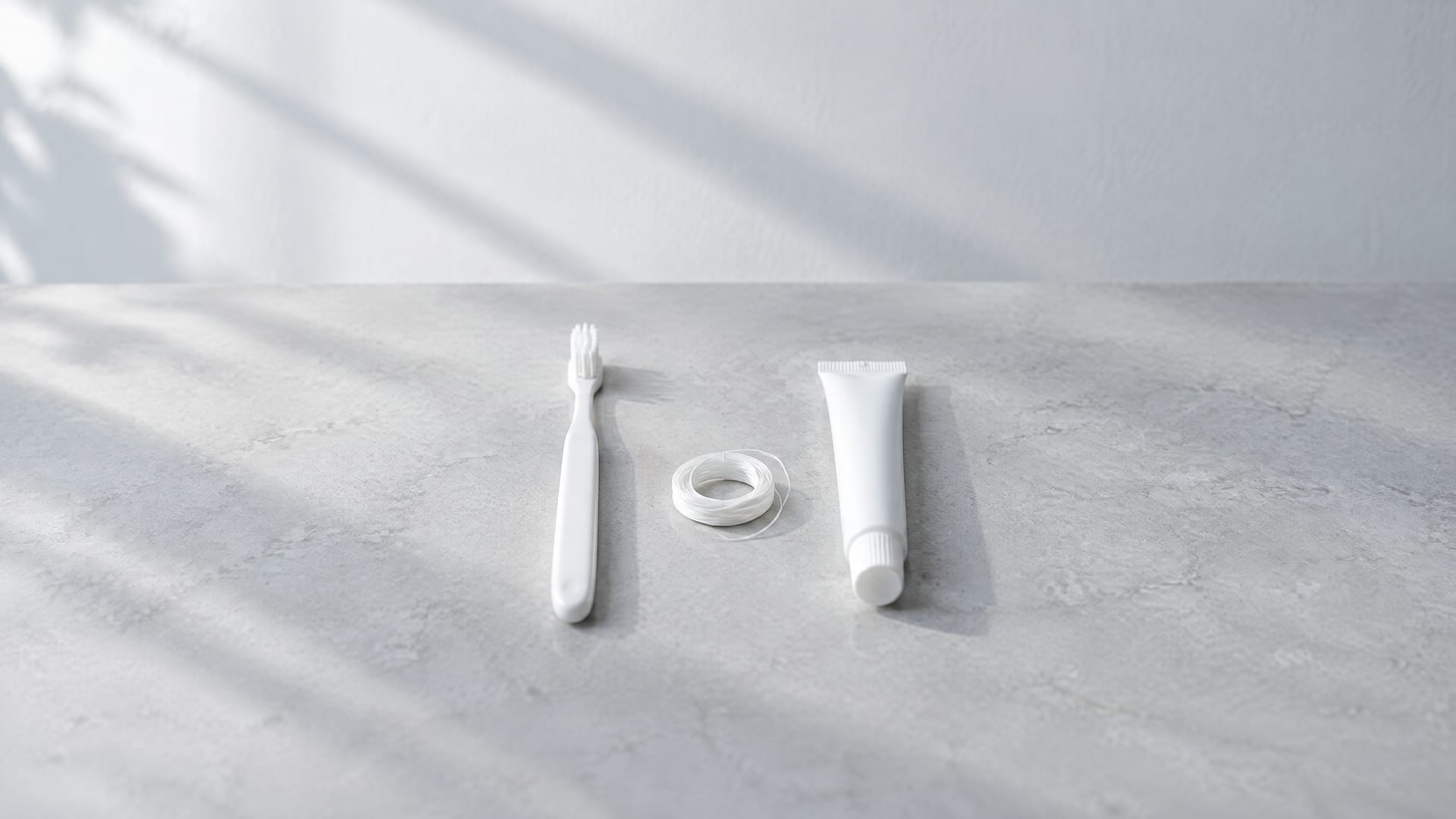
If the space between your teeth is tight, floss is right; if there is a gap or the gums have receded, an interdental brush is right. I recommend using it once a day, before bed. For how to choose a size, see how to insert an interdental brush.
Which habits help prevent cavities, and which should be avoided?
- Brushing before bed: saliva decreases while you sleep, making it the most vulnerable time. If you brush properly only once a day, make it before bed.
- Fewer snacks: eat snacks at set times, all at once.
- Water for drinks: soda, sports drinks, and fruit juice contain both sugar and acid.
- Xylitol gum: helps increase saliva, but cannot replace brushing.
- Watch out for sticky snacks: caramels, jelly candies, and dried fruit stick in the grooves for a long time.
Who should get fluoride application and sealants?
People at high risk of cavities. Not everyone needs them.
| Preventive treatment | Recommended for | Cost |
|---|---|---|
| Fluoride application | People who get cavities often, have dry mouth, are in orthodontic treatment, or have exposed roots from receding gums | ₩30,000 |
| Sealants | Children and teenagers with deep grooves on the chewing surfaces of their molars | Covered by insurance (Korean National Health Insurance) for permanent molars, age 18 and under |
| Regular checkups | Everyone, every 6 months to 1 year | Use insurance-covered checkups and scaling |
Whether sealants are really necessary is explained separately in Do I really need sealants? The fluoride application price is Wonjin Dental’s as of September 2026, and all prices can be found on the full fee schedule.
How we do it at Wonjin Dental
At checkups, I look at the pattern in which cavities form rather than how many there are. Depending on whether they keep appearing between the teeth or form at the neck of the tooth near the gums, I also ask about flossing habits, drinking habits, and whether you have dry mouth. I recommend fluoride application (₩30,000) only when the risk is high, and set the checkup interval together with insurance-covered scaling (once a year).
Frequently asked questions
Can an early cavity harden again without treatment?
A very early cavity, where the surface has only turned chalky white, can sometimes stop progressing with fluoride and good care. If a hole has already formed or it has reached the dentin, it will not reverse on its own. At the dental clinic, we look at the stage and decide whether to monitor or treat it.
Are cavities hereditary?
Some factors are inborn, such as tooth shape and the amount and quality of saliva. But eating and brushing habits and the spread of bacteria within families have a larger effect. If your parents had many cavities, it is a good idea to set shorter checkup intervals.
Can I drink sugar-free drinks as much as I like?
Even without sugar, carbonation or acidic ingredients can cause erosion, where the tooth surface dissolves. Use a straw, don’t sip for a long time, and rinse with water after drinking.