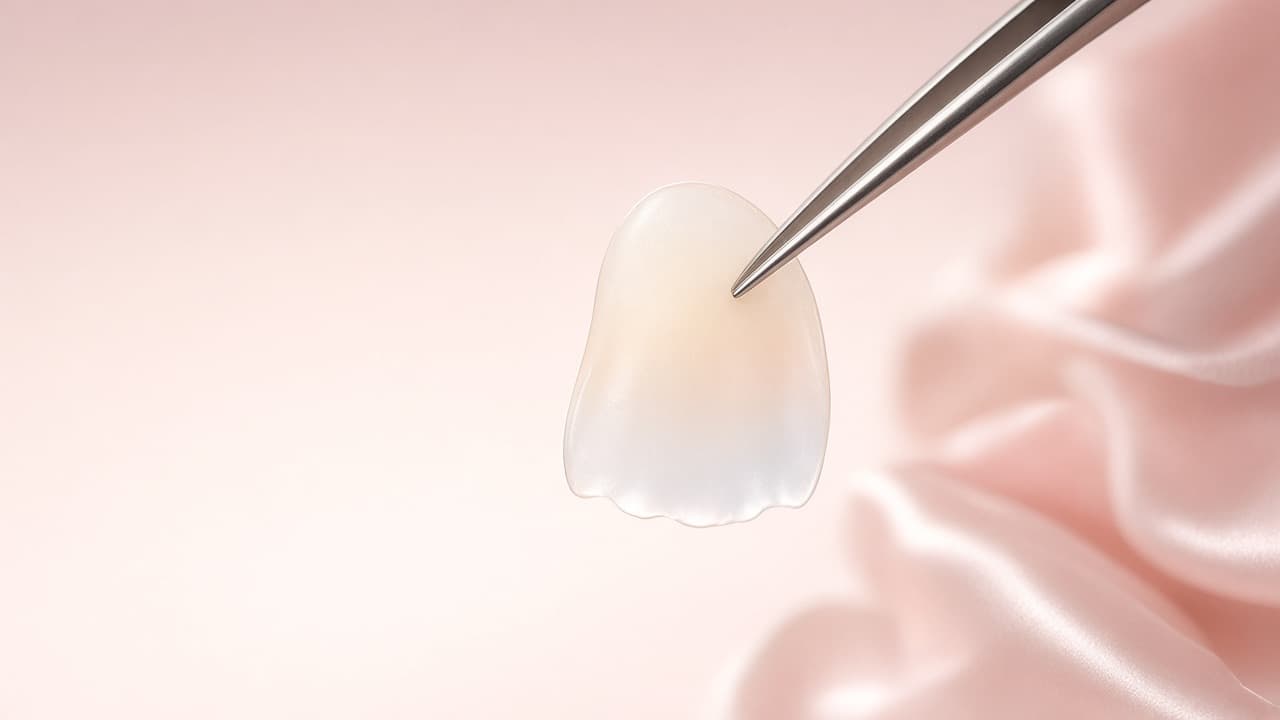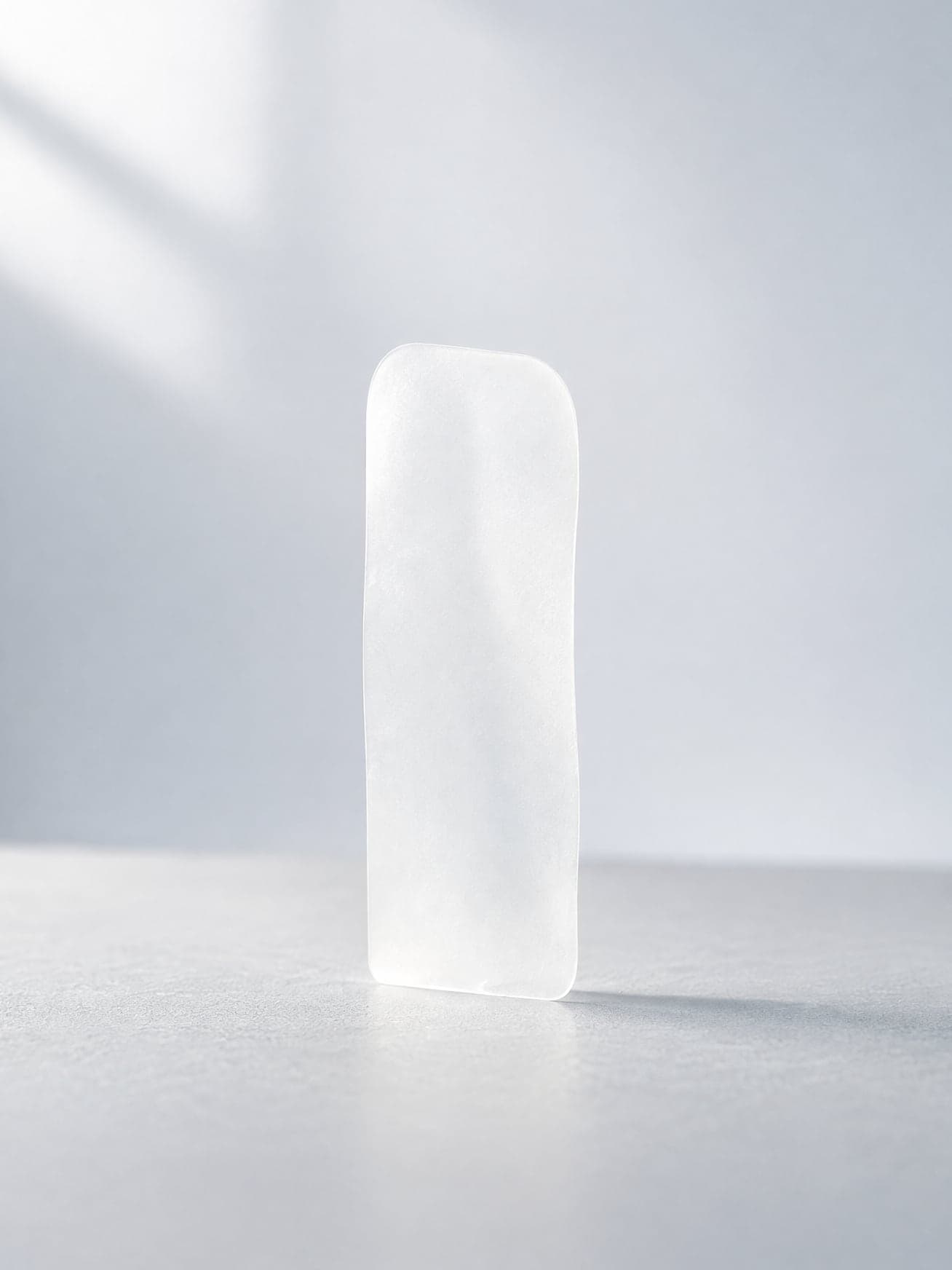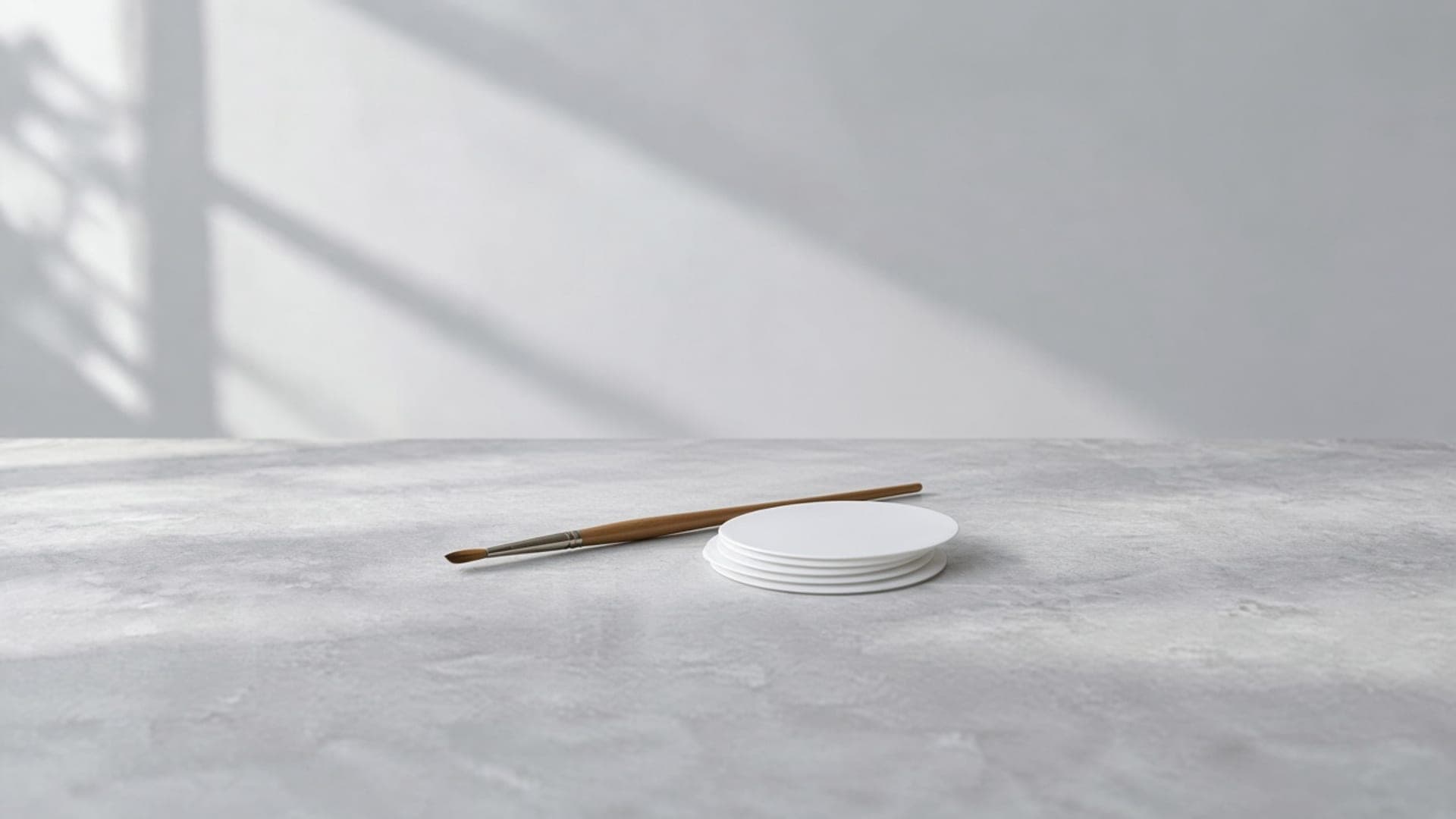
How is a build-up laminate made?
A dental technician mixes porcelain powder with water, brushes on one layer and fires it in a furnace. Another layer goes on top and is fired again, and this is repeated until the veneer is complete. Each layer gets its own color and translucency: slightly deeper toward the gum, letting more light through toward the edge.
The traditional material that is built up from porcelain powder and fired is feldspathic porcelain. In a 2025 meta-analysis of 29 studies, about 96% of feldspathic porcelain veneers were still in place after a little over 10 years, with no difference in survival compared with other porcelain materials[3]. However, more technical problems such as fractures were reported than with lithium disilicate (a strengthened glass-ceramic)[3]. In another meta-analysis of 13 studies, about 89% of porcelain veneers were still in place over a median of 9 years, and the most common problem was fracture or chipping (about 4%)[4].
There are two main ways to make a veneer.
| What to look at | Machine-milled veneer | Build-up laminate |
|---|---|---|
| Method | A porcelain block is milled by machine into one sheet | Porcelain powder is layered and fired again and again |
| Color | Comes from a single block, even and simple | Color and translucency differ in each layer |
| Thickness | About 0.3mm | Can be made 0.1mm or thinner |
| Time | Same day possible | About 1 week (Platinum about 2 weeks) |
Is it the same as a no-prep veneer?
No. Build-up is how it is made, and no-prep is whether the tooth is shaved. Brinate combines the two: it is layered, so it is thin, and because it is thin, the tooth is not shaved. A systematic review comparing no-prep or minimal-prep veneers with the reduction-type laminate veneers common elsewhere found that the survival rate of minimal-prep veneers was not lower, but noted that the study methods varied, so the findings should be read with caution[1]. The difference between no-prep veneers and the reduction-type laminate veneers common elsewhere is covered in No-prep veneers vs. regular porcelain veneers: what is the difference?
Why does layering by hand make it thinner?
Because building it up one layer at a time lets us put only as much thickness as each spot needs. Hand-layered Brinate is 0.1mm or less, thinner than a sheet of paper. A machine-milled porcelain veneer is about 0.3mm, so the front of the tooth is trimmed slightly before bonding.
How much tooth is kept also affects how long a veneer lasts. In a study that followed 580 veneers for up to 12 years, 99% of those prepared only within the enamel (the outer layer of the tooth) were still in place, while those bonded to dentin (the layer beneath the enamel) were about 10 times more likely to fail[2].
How we do it at Wonjin Dental
Both types of Brinate at Wonjin Dental are build-up laminates.
| Type | Method | Thickness | Time | Cost per tooth |
|---|---|---|---|---|
| Brinate Build-up | Layered and fired again and again | 0.1mm or less | About 1 week | ₩550,000 |
| Brinate Platinum | Layered on platinum foil, then the foil is removed | 0.1mm or less | About 2 weeks | ₩990,000 |
| Porcelain veneer (front slightly trimmed) | A porcelain block milled by machine | About 0.3mm | Same day on days when it is possible | ₩330,000 |
As of September 2026, VAT included (cosmetic treatment). Other items are listed in all fees.
Being layered does not make it right for every tooth. If a tooth already sticks out, or the mouth protrudes because of the jawbone, placing a layer on top makes it look even more forward, so we do not do it, and we tell you so first.
Frequently asked questions
Is build-up laminate a brand name?
No. It describes a way of making veneers, so many clinics use it. Brinate is the name of the veneer Wonjin Dental makes this way.
Is it the same as a resin build-up?
No. A resin build-up fills a chipped or decayed spot with resin to restore its shape, while a build-up laminate bonds a thin sheet of layered porcelain to the front of a front tooth. The difference is explained in Build-up laminate: is it the same as a resin build-up?
How many visits does a build-up laminate take?
Two. On the first day we decide the color and shape and take impressions, and the finished veneers are bonded at the next visit. The timeline is covered in Build-up laminate timeline: how long does it take?